
In Clarity AD, in which stage of AD were most of the patients?
Which stage of AD
The majority of patients were in the earliest symptomatic stage—MCI due to AD.1,2
LEQEMBI IQLIK®: NOW APPROVED FOR INITIATION IN EARLY AD TREATMENT 500 mg once-weekly (two 250 mg single-dose, prefilled autoinjectors) See dosing information

For US Healthcare Professionals Only



Clarity AD Core placebo-controlled period: An 18-month, global, placebo-controlled, double-blind, parallel-group, randomized clinical trial of 1795 patients with MCI due to AD or mild AD dementia with confirmed Aβ pathology. Patients were randomized 1:1 to receive infusions of LEQEMBI 10 mg/kg (n=898) or placebo (n=897) once every 2 weeks. The primary objective was to evaluate the effect of LEQEMBI as measured by CDR-SB.1,3
Clarity AD Long-Term Extension (LTE): A global, open-label, single-arm study. At 18 months, patients enrolled in the core placebo-controlled period were given the option to participate in LTE for up to 48 months; some remained on infusion while others were on different subcutaneous maintenance doses. The primary objective was to evaluate the long-term safety and whether the effect of LEQEMBI is maintained over time (CDR-SB).4-6
Alzheimer’s Disease Neuroimaging Initiative (ADNI): A global (US & Canada) research study that follows the natural progression of AD, including imaging, biomarkers, genetics, and neurocognitive tests and that actively evaluates the investigation and development of treatments for AD. ADNI is an observational cohort that was utilized to inform the design of the Clarity AD study. ADNI was utilized as a historical and observational control for the
open label extension of Clarity AD, and was matched to the Clarity AD population based on demographics and clinical characteristics (n=436 at baseline, followed for 48 months). ADNI participants were not part of the Clarity AD study.4,5
(27% vs placebo; P<0.0001)
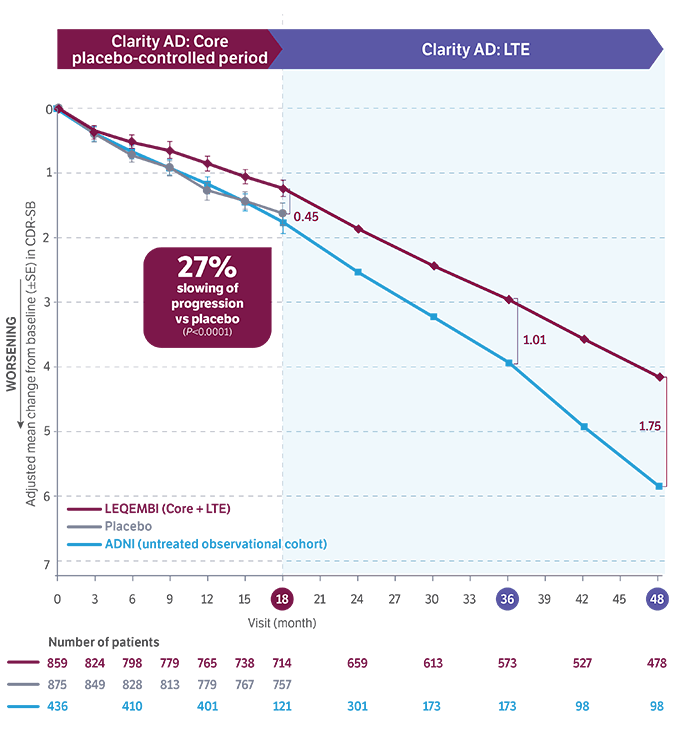
Cutoff: March 31, 2025.10
The LTE study is ongoing.11
LTE data limitations: Patients were enrolled in the LTE after completion of the controlled period and are subject to continued dropout. These data included patients on a range of subcutaneous doses, all within the FDA bioequivalence acceptance criteria (PK/PD).4,6
ADNI data limitations: These retrospective analyses for ADNI should be interpreted carefully to determine a difference with LEQEMBI because of the potential selection bias and attrition.
Aβ, amyloid beta; AD, Alzheimer's disease; ADNI, Alzheimer's Disease Neuroimaging Initiative; CDR, Clinical Dementia
Rating; CDR-SB, Clinical Dementia Rating-Sum of Boxes; LTE, long-term extension; PD, pharmacodynamics; PK, pharmacokinetics; SE, standard error.
Statistically significant reductions in amyloid burden vs placebo were observed by 3 months and maintained through 18 months (−59.1 CL difference at 18 months; P<0.00001).3
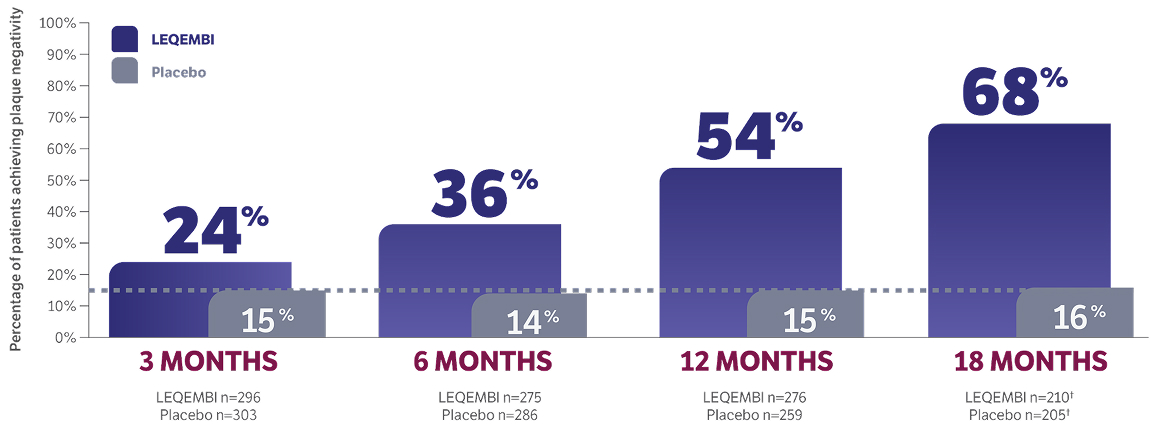
Limitations: Prespecified biomarker endpoint was not adjusted for multiplicity, therefore, no conclusions or comparisons can be drawn.

*Plaque negativity is defined as conversion to amyloid PET negative (<30 CL).3
†73 subjects were not included at 18 months (per the statistical analysis plan), since their PET assessments were performed after receiving LEQEMBI in the extension phase.3
Aβ, amyloid beta; CL, Centiloid.
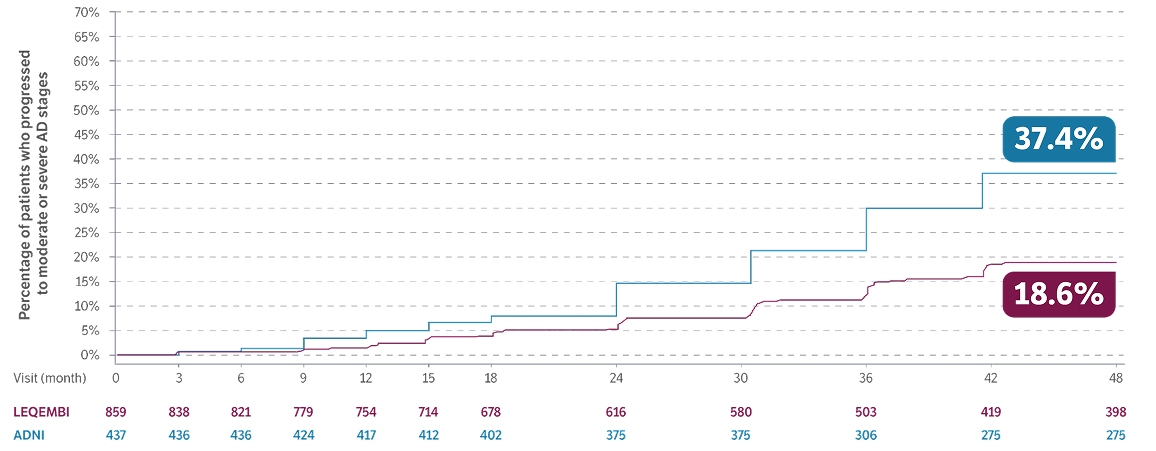
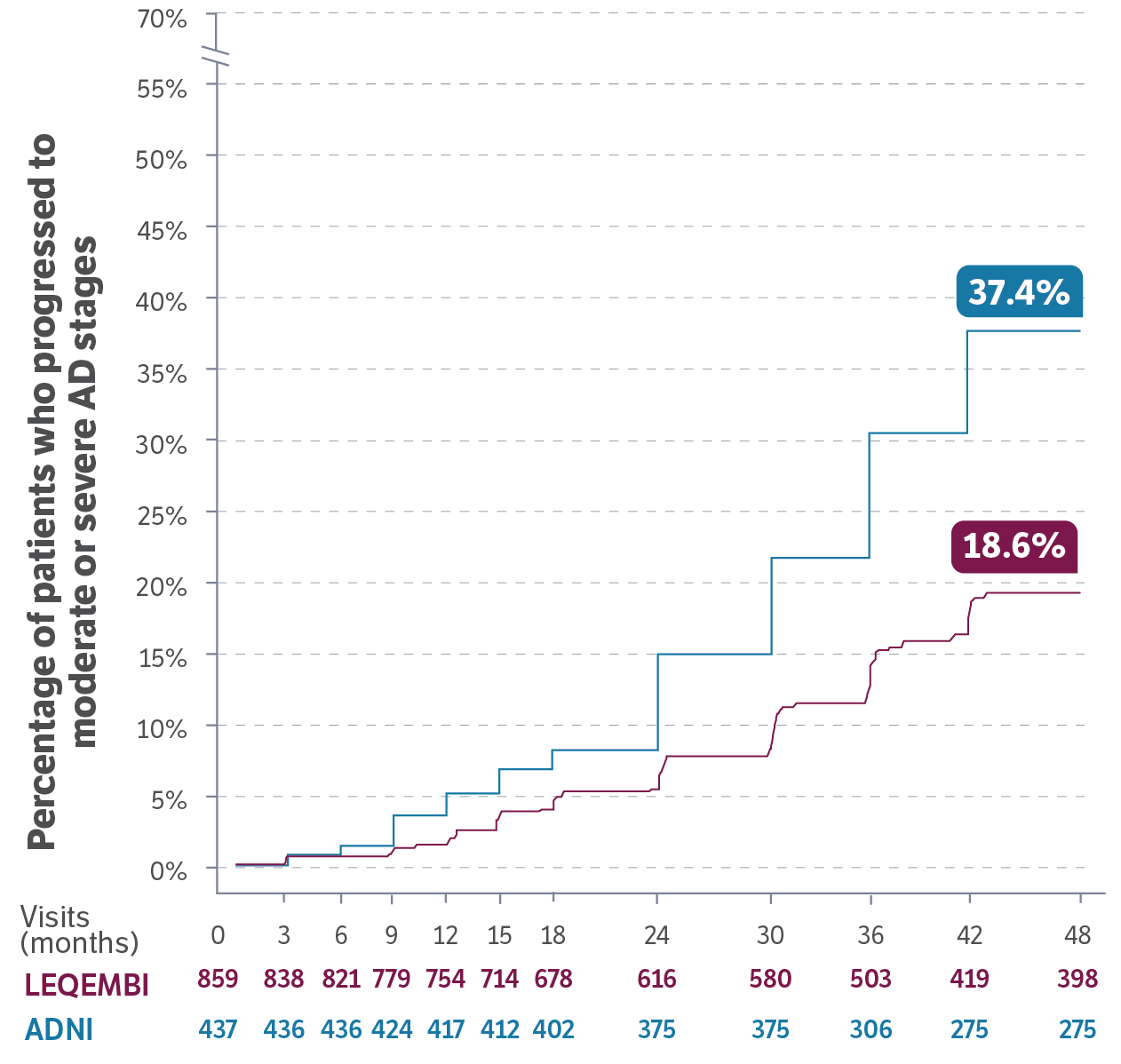
*Prespecified subgroup analysis of reduced risk of progression: Progression was defined as CDR-SB score progressing to moderate or severe dementia (≥9.5), based on Kaplan-Meier plots.5
LTE Limitations: Patients were enrolled in the LTE after completion of the controlled period and are subject to continued dropout. These data included patients on a range of subcutaneous doses, all within the FDA bioequivalence acceptance criteria (PK/PD).4,6
ADNI data limitations: This retrospective analysis for ADNI should be interpreted carefully to determine a difference with LEQEMBI because of the potential selection bias and attrition.
of LEQEMBI patients who stayed on treatment remained in the early AD stages at 4 years†5



Moderate to severe AD dementia stages are associated with loss of independence and difficulty with daily activities13
†MCI due to AD and mild AD are collectively known as the early stages of AD.13
AD, Alzheimer’s disease; ADNI, Alzheimer’s Disease Neuroimaging Initiative; CDR-SB, Clinical Dementia Rating-Sum of Boxes;
LTE, long-term extension; MCI, mild cognitive impairment;
PD, pharmacodynamics; PK, pharmacokinetics.
An overview of the steps involved from diagnosis through treatment with LEQEMBI (for eligible patients)
Which stage of AD
The majority of patients were in the earliest symptomatic stage—MCI due to AD.1,2
LTE data inclusive
Yes, patients receiving both IV and different subcutaneous maintenance doses were included in the LTE data.5

