




Resources that are downloadable and printable for easy use
-
Screenings & Diagnosis
-
Initiate & Manage Treatment
-
Videos
Screenings & Diagnosis
PCP Checklist
A convenient resource for primary care providers (PCPs) that helps with identifying symptoms, screening, and referring appropriate patients who are candidates for LEQEMBI
LEQEMBI Diagnostic Workup Checklist
A checklist intended to help health care providers determine the appropriateness of LEQEMBI therapy and document clinical decision-making
The Role of BBMs in Early Detection of AD Pathology
A guide that details why BBMs matter, their use in a triage or confirmatory manner, and available testing assays
Initiate & Manage Treatment

Diagnosis to Treatment Brochure
Brochure that provides an overview of the steps involved, from diagnosis through treatment with LEQEMBI (for eligible patients)
Specialty Distributors and Specialty Pharmacy Network Guide
Specialty Distributors and Specialty Pharmacy Network Guide
List of the specialty distributors and the specialty pharmacies that stock LEQEMBI
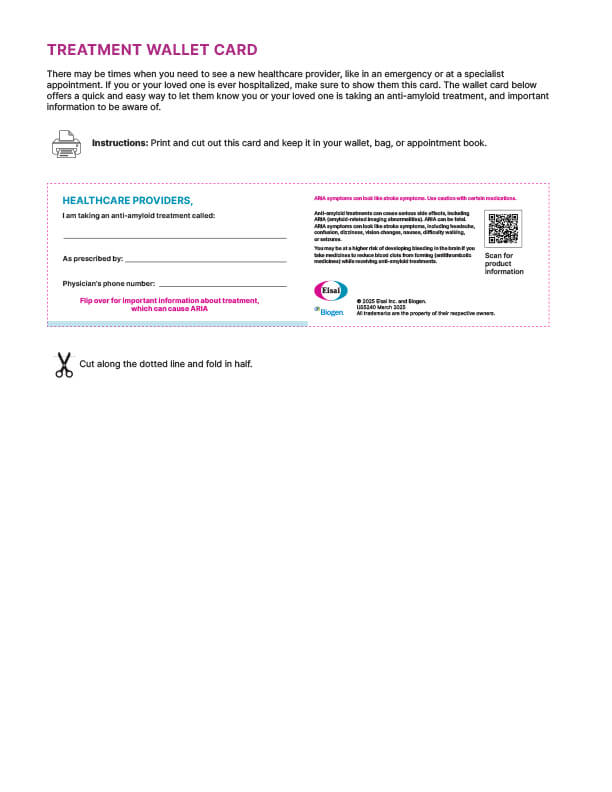
LEQEMBI Wallet Card
A wallet card to help patients inform health care providers that they are taking LEQEMBI

My LEQEMBI Appointment Tracker
Encourage patients and care partners to use the LEQEMBI appointment tracker to help them stay on top of their treatment schedule

Getting Started on IQLIK Guide
Information on how to get patients started on LEQEMBI IQLIK
Videos
Mechanism of AD
What is the mechanism of action of LEQEMBI?
5 facts about the Clinical Dementia Rating-Sum of Boxes (CDR-SB) in MCI due to AD
How to use LEQEMBI® IQLIK™
Identifying appropriate patients for treatment with LEQEMBI
Treatment with LEQEMBI
Real-World Evidence with LEQEMBI
LEQEMBI Safety
Mechanism of AD

Transcript
The amyloid cascade is an ongoing, bidirectional process that contributes to progressive neurodegeneration in Alzheimer's disease or AD.
It is known to trigger downstream effects such as tau pathology, increased oxidative stress, and inflammation.
The cascade begins with increased amyloid beta production and decreased clearance, causing amyloid to build up in the brain.
This results in larger amyloid beta aggregates, which can interfere with brain cell communication and can lead to neurodegeneration.
Monomers, dimers, oligomers, and protofibrils are soluble amyloid beta species whose accumulation leads to the formation of insoluble fibrils and amyloid plaques. This process is called the amyloid cascade model.
Oligomers affect brain cell structure and functioning.
Protofibrils directly damage neurons, impair brain cell signaling, and are hypothesized to be the most toxic amyloid beta aggregate.
Fibrils and amyloid plaques are linked to impaired brain cell signaling and are found in areas of brain cell death.
Amyloid beta accumulation due to the amyloid cascade begins decades before clinical symptoms of AD become apparent.
Proactive confirmation of amyloid beta accumulation may aid in the diagnosis of mild cognitive impairment due to AD and mild AD dementia.
Mechanism of AD
What is the mechanism of action of LEQEMBI?

Transcript
SUMMARY OF IMPORTANT SAFETY INFORMATION
INDICATION
LEQEMBI® is indicated for the treatment of Alzheimer's disease. Treatment with LEQEMBI should be initiated in patients with mild cognitive impairment or mild dementia stage of disease, the population in which treatment was initiated in clinical trials.
SUMMARY OF MOST SERIOUS AND MOST COMMON RISKS ASSOCIATED WITH LEQEMBI
BOXED WARNING: AMYLOID-RELATED IMAGING ABNORMALITIES (ARIA)
CONTRAINDICATION: Contraindicated in patients with serious hypersensitivity to lecanemab-irmb or to any of the excipients. Reactions have included angioedema and anaphylaxis.
WARNINGS AND PRECAUTIONS: ARIA; HYPERSENSITIVITY REACTIONS; INFUSION-RELATED REACTIONS
MOST COMMON ADVERSE REACTIONS: infusion-related reactions, ARIA-H, ARIA-E, headache, superficial siderosis of central nervous system, rash, and nausea/vomiting.
Injection-site reactions have occurred with LEQEMBI IQLIK.
Please see full Important Safety Information below and accompanying full US Prescribing Information, including Boxed WARNING.
Alzheimer's disease is a devastating chronic, progressive disease which results in the decline of both cognitive abilities and daily functioning.
It is caused by the degeneration and death of brain cells critical for processing, storing, and retrieving information. One key hallmark of the disease is the abnormal accumulation of a protein called amyloid beta, which results from an imbalance of its production and clearance. Amyloid beta builds up in 2 forms, known as aggregated soluble and insoluble proteins.
Mild cognitive impairment is the first symptomatic stage of the disease where memory and cognitive functions begin to be impaired but not severe enough to significantly disrupt daily life.
LEQEMBI is a humanized immunoglobulin gamma 1 (IgG1) monoclonal antibody and the first fully approved FDA treatment that works on fighting Alzheimer's disease in 2 ways. First, LEQEMBI targets and clears insoluble amyloid beta plaques that have been accumulating for years. Second, LEQEMBI works to clear toxic, soluble aggregates of amyloid beta proteins such as oligomers and protofibrils.
LEQEMBI is an early Alzheimer's disease treatment designed to selectively target toxic protofibrils in addition to amyloid plaques. As a result of LEQEMBI binding to these toxic forms of the amyloid beta, it enables the microglia, the brain's immune cells, to recognize the toxic proteins and clear them out of the body via phagocytosis.
Early detection of abnormal amyloid accumulation via biomarker analysis, in addition to clinical symptoms, is critical in the diagnosis of patients with mild cognitive impairment due to Alzheimer's disease who may be appropriate for LEQEMBI.
INDICATION
LEQEMBI® is indicated for the treatment of Alzheimer's disease (AD). Treatment with LEQEMBI should be initiated in patients with mild cognitive impairment (MCI) or mild dementia stage of disease, the population in which treatment was initiated in clinical trials.
IMPORTANT SAFETY INFORMATION
WARNING: AMYLOID-RELATED IMAGING ABNORMALITIES (ARIA)
Monoclonal antibodies directed against aggregated forms of beta amyloid, including LEQEMBI, can cause ARIA, characterized as ARIA with edema (ARIA-E) and ARIA with hemosiderin deposition (ARIA-H). Incidence and timing of ARIA vary among treatments. ARIA usually occurs early in treatment and is usually asymptomatic, although serious and life-threatening events, including seizure and status epilepticus, can occur. ARIA can be fatal. Serious intracerebral hemorrhages (ICH) greater than 1 cm, some of which have been fatal, have been observed with this class of medications. Because ARIA-E can cause focal neurologic deficits that can mimic an ischemic stroke, consider whether such symptoms could be due to ARIA-E before giving thrombolytic therapy to a patient being treated with LEQEMBI.
Apolipoprotein E ε4, (ApoE ε4) Homozygotes: Patients who are ApoE ε4 homozygotes (approximately 15% of patients with AD) treated with this class of medications have a higher incidence of ARIA, including symptomatic, serious, and severe radiographic ARIA, compared to heterozygotes and noncarriers. Testing for ApoE ε4 status should be performed prior to initiation of treatment to inform the risk of developing ARIA. Prior to testing, prescribers should discuss with patients the risk of ARIA across genotypes and the implications of genetic testing results. Prescribers should inform patients that if genotype testing is not performed, they can still be treated with LEQEMBI; however, it cannot be determined if they are ApoE ε4 homozygotes and at higher risk for ARIA.
Consider the benefit of LEQEMBI for the treatment of AD and the potential risk of serious ARIA events when deciding to initiate treatment with LEQEMBI.
CONTRAINDICATION
Contraindicated in patients with serious hypersensitivity to lecanemab-irmb or to any of the excipients. Reactions have included angioedema and anaphylaxis.
WARNINGS AND PRECAUTIONS
AMYLOID-RELATED IMAGING ABNORMALITIES
Medications in this class, including LEQEMBI, can cause ARIA-E, which can be observed on MRI as brain edema or sulcal effusions, and ARIA-H, which includes microhemorrhage and superficial siderosis. ARIA can occur spontaneously in patients with AD, particularly in patients with MRI findings suggestive of cerebral amyloid angiopathy (CAA), such as pretreatment microhemorrhage or superficial siderosis. ARIA-H generally occurs with ARIA-E. Reported ARIA symptoms may include headache, confusion, visual changes, dizziness, nausea, and gait difficulty. Focal neurologic deficits may also occur. Symptoms usually resolve over time.
Incidence of ARIA
Symptomatic ARIA occurred in 3% and serious ARIA symptoms in 0.7% with LEQEMBI. Clinical ARIA symptoms resolved in 79% of patients during the period of observation. ARIA, including asymptomatic radiographic events, was observed: LEQEMBI, 21%; placebo, 9%. ARIA-E was observed: LEQEMBI, 13%; placebo, 2%. ARIA-H was observed: LEQEMBI, 17%; placebo, 9%. No increase in isolated ARIA-H was observed for LEQEMBI vs placebo.
Incidence of ICH
ICH greater than 1 cm in diameter was reported in 0.7% with LEQEMBI vs 0.1% with placebo. Fatal events of ICH in patients taking LEQEMBI have been observed.
Risk Factors of ARIA and ICH
ApoE ε4 Carrier Status
Of the patients taking LEQEMBI, 16% were ApoE ε4 homozygotes, 53% were heterozygotes, and 31% were noncarriers. With LEQEMBI, ARIA was higher in ApoE ε4 homozygotes (LEQEMBI: 45%; placebo: 22%) than in heterozygotes (LEQEMBI: 19%; placebo: 9%) and noncarriers (LEQEMBI: 13%; placebo: 4%). Symptomatic ARIA-E occurred in 9% of ApoE ε4 homozygotes vs 2% of heterozygotes and 1% of noncarriers. Serious ARIA events occurred in 3% of ApoE ε4 homozygotes and in approximately 1% of heterozygotes and noncarriers. The recommendations on management of ARIA do not differ between ApoE ε4 carriers and noncarriers.
Radiographic Findings of CAA
Neuroimaging findings that may indicate CAA include evidence of prior ICH, cerebral microhemorrhage, and cortical superficial siderosis. CAA has an increased risk for ICH. The presence of an ApoE ε4 allele is also associated with CAA.
The baseline presence of at least 2 microhemorrhages or the presence of at least 1 area of superficial siderosis on MRI, which may be suggestive of CAA, have been identified as risk factors for ARIA. Patients were excluded from Clarity AD for the presence of greater than 4 microhemorrhages and additional findings suggestive of CAA (prior cerebral hemorrhage greater than 1 cm in greatest diameter, superficial siderosis, vasogenic edema) or other lesions (aneurysm, vascular malformation) that could potentially increase the risk of ICH.
Concomitant Antithrombotic or Thrombolytic Medication
In Clarity AD, baseline use of antithrombotic medication (aspirin, other antiplatelets, or anticoagulants) was allowed if the patient was on a stable dose. Most exposures were to aspirin. Antithrombotic medications did not increase the risk of ARIA with LEQEMBI. The incidence of ICH: 0.9% in patients taking LEQEMBI with a concomitant antithrombotic medication vs 0.6% with no antithrombotic and 2.5% in patients taking LEQEMBI with an anticoagulant alone or with antiplatelet medication such as aspirin vs none in patients receiving placebo.
Fatal cerebral hemorrhage has occurred in 1 patient taking an anti-amyloid monoclonal antibody in the setting of focal neurologic symptoms of ARIA and the use of a thrombolytic agent.
Additional caution should be exercised when considering the administration of antithrombotics or a thrombolytic agent (for example, tissue plasminogen activator) to a patient already being treated with LEQEMBI. Because ARIA-E can cause focal neurologic deficits that can mimic an ischemic stroke, treating clinicians should consider whether such symptoms could be due to ARIA-E before giving thrombolytic therapy in a patient being treated with LEQEMBI.
Caution should be exercised when considering the use of LEQEMBI in patients with factors that indicate an increased risk for ICH and, in particular, patients who need to be on anticoagulant therapy or patients with findings on MRI that are suggestive of CAA.
Radiographic Severity With LEQEMBI
Most ARIA-E radiographic events occurred within the first 7 doses, although ARIA can occur at any time and patients can have greater than 1 episode. Maximum radiographic severity of ARIA-E with LEQEMBI was mild in 4%, moderate in 7%, and severe in 1% of patients. Resolution on MRI occurred in 52% of ARIA-E patients by 12 weeks, 81% by 17 weeks, and 100% overall after detection. Maximum radiographic severity of ARIA-H microhemorrhage with LEQEMBI was mild in 9%, moderate in 2%, and severe in 3% of patients; superficial siderosis was mild in 4%, moderate in 1%, and severe in 0.4% of patients. With LEQEMBI, the rate of severe radiographic ARIA-E was highest in ApoE ε4 homozygotes (5%) vs heterozygotes (0.4%) or noncarriers (0%). With LEQEMBI, the rate of severe radiographic ARIA-H was highest in ApoE ε4 homozygotes (13.5%) vs heterozygotes (2.1%) or noncarriers (1.1%).
Monitoring and Dose Management Guidelines
Baseline brain MRI and periodic monitoring with MRI are recommended. Enhanced clinical vigilance for ARIA is recommended during the first 14 weeks of treatment. Depending on ARIA-E and ARIA-H clinical symptoms and radiographic severity, use clinical judgment when considering whether to continue dosing or to temporarily or permanently discontinue LEQEMBI. If a patient experiences ARIA symptoms, clinical evaluation should be performed, including MRI if indicated. If ARIA is observed on MRI, careful clinical evaluation should be performed prior to continuing treatment.
HYPERSENSITIVITY REACTIONS
Hypersensitivity reactions, including angioedema, bronchospasm, and anaphylaxis, have occurred with LEQEMBI. Promptly discontinue the infusion upon the first observation of any signs or symptoms consistent with a hypersensitivity reaction and initiate appropriate therapy.
INFUSION-RELATED REACTIONS (IRRs)
IRRs were observed—LEQEMBI: 26%; placebo: 7%—and most cases with LEQEMBI (75%) occurred with the first infusion. IRRs were mostly mild (69%) or moderate (28%). Symptoms included fever and flu-like symptoms (chills, generalized aches, feeling shaky, and joint pain), nausea, vomiting, hypotension, hypertension, and oxygen desaturation.
IRRs can occur during or after the completion of infusion. In the event of an IRR during the infusion, the infusion rate may be reduced or discontinued, and appropriate therapy initiated as clinically indicated. Consider prophylactic treatment prior to future infusions with antihistamines, acetaminophen, nonsteroidal anti-inflammatory drugs, or corticosteroids.
ADVERSE REACTIONS
The most common adverse reactions reported in greater than or equal to 5% with LEQEMBI infusion every 2 weeks and greater than or equal to 2% higher than placebo were IRRs (LEQEMBI: 26%; placebo: 7%), ARIA-H (LEQEMBI: 14%; placebo: 8%), ARIA-E (LEQEMBI: 13%; placebo: 2%), headache (LEQEMBI: 11%; placebo: 8%), superficial siderosis of central nervous system (LEQEMBI: 6%; placebo: 3%), rash (LEQEMBI: 6%; placebo: 4%), and nausea/vomiting (LEQEMBI: 6%; placebo: 4%)
Safety profile of LEQEMBI IQLIK for maintenance treatment was similar to LEQEMBI infusion. Patients who received LEQEMBI IQLIK experienced localized and systemic (less frequent) injection-related reactions (mild to moderate in severity)
LEQEMBI (lecanemab-irmb) is available:
Intravenous infusion: 100 mg/mL
Subcutaneous injection: 200 mg/mL
What is the mechanism of action of LEQEMBI?
LEQEMBI works to remove 2 forms of amyloid: 1) Insoluble plaque—the final aggregated form of Aβ that accumulates over years; 2) Soluble protofibrils—direct toxic drivers of underlying disease that are continuously produced even after plaque clearance.1-3
5 facts about the Clinical Dementia Rating-Sum of Boxes (CDR-SB) in MCI due to AD

Transcript
The Clinical Dementia Rating Sum of Boxes, or CDR-SB, is a highly sensitive research tool that can be used to detect changes in a patient's condition that are meaningful, both clinically and to patients and care partners. It has been used as an endpoint in clinical trials of early Alzheimer's disease.
I'm Doctor Joy Snider, and I'm going to share the 5 top facts to know about this measure so we can better evaluate the results of these trials, regardless of whether you utilize the CDR-SB in clinical practice. Let's get started.
Fact one: The CDR-SB is valid, reliable, and sensitive in the early AD population.
AD can be divided into 5 stages. Preclinical AD, where there is evidence of AD pathology in the brain without any clinical symptoms. Mild cognitive impairment or MCI. Mild AD dementia. Moderate AD dementia and severe AD dementia. It should be noted that MCI can be associated with a number of causes such as sleep disorders, medication, depression, and other neurological disorders. Here, we are specifically referring to MCI due to AD. The earlier AD is identified and treated, the greater the opportunity for benefit. Therefore, recent clinical studies have focused on the earliest symptomatic stage of AD: MCI due to AD in the mild AD dementia stage. Because of this, there has been interest in tools that can track disease progression in early AD and clinical trials. As we said earlier, the CDR-SB has been shown to be a valid, reliable, and sensitive tool in this population, making it widely used in clinical research.
Fact 2: The CDR-SB is a measure of disease severity and is the sum of the scores across 6 domains of the CDR.
Initially developed here at Washington University School of Medicine in Saint Louis, Missouri, is a staging tool to categorize dementia severity. The Clinical Dementia Rating, or CDR, is a scale used to characterize 6 domains applicable to AD. The domains assess cognitive and functional performance. It is administered as a structured interview with both the patient and a reliable informant, such as a family member.
The CDR yields 2 scores. The global CDR, which stages disease on a scale from 0 to 3, and the CDR-SB, which is a more granular measure of disease severity and is the sum of the scores across the 6 domains.
Each domain is scored on a scale of impairment ranging from 0 to 3, with 0 being normal level of function and higher scores indicating greater impairment. The total score for the CDR-SB can range from 0 to 18. However, in early AD the typical ranges from 0.5 to 6.
This brings us to fact 3: Compared with the global CDR, the CDR-SB is more sensitive to smaller increments of change.
The use of CDR-SB scores for staging disease severity offers several advantages over the global score because the increased granularity of CDR-SB makes the assessment helpful for tracking changes across time. Furthermore, it is sensitive to smaller increments of change in a patient's cognition. Importantly, progression on an individual domain of the CDR-SB can be a meaningful change for a patient.
In early AD, natural disease progression within 18 months is 1.5 to 2 points on the CDR-SB. In fact, this is our fourth fact.
For example, let's look at the memory, orientation, and judgment and problem-solving domains.
The CDR-SB is highly sensitive and can detect changes in a patient's condition that are meaningful, both clinically and to patients and care partners.
With respect to memory, a shift of just 0.5 points on the CDR scoring table, such as progressing from 0.5 to 1, could indicate a decline from consistent, slight forgetfulness to forgetfulness that interferes with everyday activities. In my experience, patients with a score of 0.5 still remember events well, like going out to eat with friends the day before or where they went on vacation a few weeks ago.
Patients with a score of 1 are more likely to forget the pertinent details of recent events. A shift from .5 to 1 also could mean a patient who had been able to manage their own appointments may now need reminders.
With respect to the orientation domain score, at 0.5, the patient can still be driving and going places with only slight difficulty understanding time relationships. And a score of 1, driving might have to be limited to familiar areas. This could mean a change from being able to drive to visit family in a distant city to limiting driving to just their local neighborhood.
And as patients move from .5 to 1 in the judgment and problem-solving domain, they go from having mild difficulty solving problems and detecting similarities and differences, to moderate difficulty. This could meet a need for more support from a care partner to negotiate daily life. For example, a score of 0.5 indicates that patients may still manage their finances and balance their checkbook, but it might take a little longer. They may still plan a trip and book their own travel, but with a score of 1, patients will need help with these tasks.
Okay, we've made it to fact 5. The CDR-SB has been widely used in clinical trials in early AD.
This is because, as noted earlier, the CDR-SB has been shown to be a valid, reliable, and sensitive tool in the early AD population. It is also considered a clinically meaningful endpoint by the US Food and Drug Administration.
To wrap up, here are the top 5 facts to know about the use of the CDR-SB in evaluating early AD. Hopefully, this overview aids understanding of the sensitivity of the CDR-SB and its meaningfulness, both clinically as well as to patients and care partners. Please share this with your team members and colleagues to help them interpret the results of early AD clinical trials.
5 facts about the Clinical Dementia Rating-Sum of Boxes (CDR-SB) in MCI due to AD
The primary endpoint in the Phase 3 Clarity AD study was change from baseline in CDR-SB.1 This video highlights 5 key takeaways to help understand its clinical meaningfulness and importance to the mild cognitive impairment (MCI) due to Alzheimer’s disease (AD) population.
How to use LEQEMBI IQLIK

Transcript
This video will teach you how to use LEQEMBI® IQLIK™.
This once-weekly, at-home maintenance treatment is an available option to patients after 18 months of LEQEMBI infusions.
LEQEMBI is a prescription medicine used to treat people with Alzheimer's disease, which includes mild cognitive impairment (MCI) or mild dementia stage of disease.
Before you start using LEQEMBI IQLIK, read the Instructions for Use and the Medication Guide that you received with your autoinjector.
You should also read them each time you refill because there may be new information. This information does not take the place of talking to your health care provider about your medical condition or your treatment. If you have any questions about how to use the autoinjector, contact your health care provider.
Meet Sophia, she'll be demonstrating the injection process.
This is Sophia's husband, Rick. He's here to help.
Place your supplies on a clean, flat surface.
You'll need the LEQEMBI IQLIK autoinjector, cotton ball or gauze, an adhesive bandage, an alcohol wipe, and a sharps disposal container.
Your LEQEMBI IQLIK arrives in a refrigerated carton.
When you are ready to inject, take one out and let it sit at room temperature for 20 minutes.
Check the carton and autoinjector for damaged or broken seals.
Do not use if the expiration date on the carton has passed, or if the perforations on the carton are broken.
Check the viewing window. Do not use the autoinjector if it has been damaged or dropped, looks cloudy, discolored, or contains particles. The liquid should be clear and colorless to pale yellow. Air bubbles are normal.
Do not use if the expiration date has passed.
Once at room temperature, it can stay out for up to 14 days, but don't put it back in the fridge.
Use 1 injector weekly as directed.
Before you inject, wash your hands with soap and water, or use hand sanitizer.
Do not inject through clothing.
You can inject into the front of the thighs or stomach area.
If a care partner helps, they can also inject in the back of the upper arms.
Do not inject into moles, scars, bruises, tattoos, or red or injured skin. Do not inject into the 2-inch area around your belly button or through clothing.
Pick your site at least 1 inch away from your last injection.
Clean with an alcohol wipe and let it air dry.
Don't touch, fan, or blow after it's been cleaned.
Remove the clear cap by pulling it straight off. Don't twist or bend.
Throw the cap away in your trash or sharps container.
Place the magenta needle cover flat against the skin at a 90-degree angle.
Push down firmly to start the injection. Hold steady.
You may hear a click, which means the injection has started.
The purple plunger rod will move down in the viewing window during the injection.
If you have trouble hearing the click, watch the purple plunger rod as it moves down.
Hold for about 10 seconds.
You'll then hear a second click, which means the injection is complete. Keep holding for 5 more seconds.
Pull the autoinjector straight up. The magenta needle cover will automatically move into place to cover the needle.
You may notice a small drop of blood. This is normal. Press a cotton ball or gauze on the area and cover with a bandage if needed. Do not rub the injection site.
Throw away the used injector into a sharps container.
If you don't have an FDA-cleared sharps container, use a heavy-duty plastic container with a tight-fitting, puncture-resistant lid. Label it clearly.
When it's almost full, follow local guidelines to dispose of it properly.
That's it.
We've covered how to gather your supplies and prepare, inject, and dispose of LEQEMBI IQLIK.
You can watch this video again any time.
If you have questions, reach out to your health care provider.
Scan the QR code to download a wallet card that informs your health care provider you are taking LEQEMBI IQLIK.
INDICATION
LEQEMBI® is indicated for the treatment of Alzheimer's disease (AD). Treatment with LEQEMBI should be initiated in patients with mild cognitive impairment (MCI) or mild dementia stage of disease, the population in which treatment was initiated in clinical trials.
IMPORTANT SAFETY INFORMATION
WARNING: AMYLOID-RELATED IMAGING ABNORMALITIES (ARIA)
Monoclonal antibodies directed against aggregated forms of beta amyloid, including LEQEMBI, can cause ARIA, characterized as ARIA with edema (ARIA-E) and ARIA with hemosiderin deposition (ARIA-H). Incidence and timing of ARIA vary among treatments. ARIA usually occurs early in treatment and is usually asymptomatic, although serious and life-threatening events, including seizure and status epilepticus, can occur. ARIA can be fatal. Serious intracerebral hemorrhages (ICH) greater than 1 cm, some of which have been fatal, have been observed with this class of medications. Because ARIA-E can cause focal neurologic deficits that can mimic an ischemic stroke, consider whether such symptoms could be due to ARIA-E before giving thrombolytic therapy to a patient being treated with LEQEMBI.
Apolipoprotein E ε4 (ApoE ε4) Homozygotes: Patients who are ApoE ε4 homozygotes (approximately 15% of patients with AD) treated with this class of medications have a higher incidence of ARIA, including symptomatic, serious, and severe radiographic ARIA, compared to heterozygotes and noncarriers. Testing for ApoE ε4 status should be performed prior to initiation of treatment to inform the risk of developing ARIA. Prior to testing, prescribers should discuss with patients the risk of ARIA across genotypes and the implications of genetic testing results. Prescribers should inform patients that if genotype testing is not performed, they can still be treated with LEQEMBI; however, it cannot be determined if they are ApoE ε4 homozygotes and at higher risk for ARIA.
Consider the benefit of LEQEMBI for the treatment of AD and the potential risk of serious ARIA events when deciding to initiate treatment with LEQEMBI.
CONTRAINDICATION
Contraindicated in patients with serious hypersensitivity to lecanemab-irmb or to any of the excipients. Reactions have included angioedema and anaphylaxis.
WARNINGS AND PRECAUTIONS
AMYLOID-RELATED IMAGING ABNORMALITIES
Medications in this class, including LEQEMBI, can cause ARIA-E, which can be observed on MRI as brain edema or sulcal effusions, and ARIA-H, which includes microhemorrhage and superficial siderosis. ARIA can occur spontaneously in patients with AD, particularly in patients with MRI findings suggestive of cerebral amyloid angiopathy (CAA), such as pretreatment microhemorrhage or superficial siderosis. ARIA-H generally occurs with ARIA-E. Reported ARIA symptoms may include headache, confusion, visual changes, dizziness, nausea, and gait difficulty. Focal neurologic deficits may also occur. Symptoms usually resolve over time.
Incidence of ARIA
Symptomatic ARIA occurred in 3% and serious ARIA symptoms in 0.7% with LEQEMBI. Clinical ARIA symptoms resolved in 79% of patients during the period of observation. ARIA, including asymptomatic radiographic events, was observed: LEQEMBI, 21%; placebo, 9%. ARIA-E was observed: LEQEMBI, 13%; placebo, 2%. ARIA-H was observed: LEQEMBI, 17%; placebo, 9%. No increase in isolated ARIA-H was observed for LEQEMBI vs placebo.
Incidence of ICH
ICH greater than 1 cm in diameter was reported in 0.7% with LEQEMBI vs 0.1% with placebo. Fatal events of ICH in patients taking LEQEMBI have been observed.
Risk Factors of ARIA and ICH
ApoE ε4 Carrier Status
Of the patients taking LEQEMBI, 16% were ApoE ε4 homozygotes, 53% were heterozygotes, and 31% were noncarriers. With LEQEMBI, ARIA was higher in ApoE ε4 homozygotes (LEQEMBI: 45%; placebo: 22%) than in heterozygotes (LEQEMBI: 19%; placebo: 9%) and noncarriers (LEQEMBI: 13%; placebo: 4%). Symptomatic ARIA-E occurred in 9% of ApoE ε4 homozygotes vs 2% of heterozygotes and 1% of noncarriers. Serious ARIA events occurred in 3% of ApoE ε4 homozygotes and in approximately 1% of heterozygotes and noncarriers. The recommendations on management of ARIA do not differ between ApoE ε4 carriers and noncarriers.
Radiographic Findings of CAA
Neuroimaging findings that may indicate CAA include evidence of prior ICH, cerebral microhemorrhage, and cortical superficial siderosis. CAA has an increased risk for ICH. The presence of an ApoE ε4 allele is also associated with CAA.
The baseline presence of at least 2 microhemorrhages or the presence of at least 1 area of superficial siderosis on MRI, which may be suggestive of CAA, have been identified as risk factors for ARIA. Patients were excluded from Clarity AD for the presence of greater than 4 microhemorrhages and additional findings suggestive of CAA (prior cerebral hemorrhage greater than 1 cm in greatest diameter, superficial siderosis, vasogenic edema) or other lesions (aneurysm, vascular malformation) that could potentially increase the risk of ICH.
Concomitant Antithrombotic or Thrombolytic Medication
In Clarity AD, baseline use of antithrombotic medication (aspirin, other antiplatelets, or anticoagulants) was allowed if the patient was on a stable dose. Most exposures were to aspirin. Antithrombotic medications did not increase the risk of ARIA with LEQEMBI. The incidence of ICH: 0.9% in patients taking LEQEMBI with a concomitant antithrombotic medication vs 0.6% with no antithrombotic and 2.5% in patients taking LEQEMBI with an anticoagulant alone or with antiplatelet medication such as aspirin vs none in patients receiving placebo.
Fatal cerebral hemorrhage has occurred in 1 patient taking an anti-amyloid monoclonal antibody in the setting of focal neurologic symptoms of ARIA and the use of a thrombolytic agent.
Additional caution should be exercised when considering the administration of antithrombotics or a thrombolytic agent (for example, tissue plasminogen activator) to a patient already being treated with LEQEMBI. Because ARIA-E can cause focal neurologic deficits that can mimic an ischemic stroke, treating clinicians should consider whether such symptoms could be due to ARIA-E before giving thrombolytic therapy in a patient being treated with LEQEMBI.
Caution should be exercised when considering the use of LEQEMBI in patients with factors that indicate an increased risk for ICH and, in particular, patients who need to be on anticoagulant therapy or patients with findings on MRI that are suggestive of CAA.
Radiographic Severity With LEQEMBI
Most ARIA-E radiographic events occurred within the first 7 doses, although ARIA can occur at any time and patients can have greater than 1 episode. Maximum radiographic severity of ARIA-E with LEQEMBI was mild in 4%, moderate in 7%, and severe in 1% of patients. Resolution on MRI occurred in 52% of ARIA-E patients by 12 weeks, 81% by 17 weeks, and 100% overall after detection. Maximum radiographic severity of ARIA-H microhemorrhage with LEQEMBI was mild in 9%, moderate in 2%, and severe in 3% of patients; superficial siderosis was mild in 4%, moderate in 1%, and severe in 0.4% of patients. With LEQEMBI, the rate of severe radiographic ARIA-E was highest in ApoE ε4 homozygotes (5%) vs heterozygotes (0.4%) or noncarriers (0%). With LEQEMBI, the rate of severe radiographic ARIA-H was highest in ApoE ε4 homozygotes (13.5%) vs heterozygotes (2.1%) or noncarriers (1.1%).
Monitoring and Dose Management Guidelines
Baseline brain MRI and periodic monitoring with MRI are recommended. Enhanced clinical vigilance for ARIA is recommended during the first 14 weeks of treatment. Depending on ARIA-E and ARIA-H clinical symptoms and radiographic severity, use clinical judgment when considering whether to continue dosing or to temporarily or permanently discontinue LEQEMBI. If a patient experiences ARIA symptoms, clinical evaluation should be performed, including MRI if indicated. If ARIA is observed on MRI, careful clinical evaluation should be performed prior to continuing treatment.
HYPERSENSITIVITY REACTIONS
Hypersensitivity reactions, including angioedema, bronchospasm, and anaphylaxis, have occurred with LEQEMBI. Promptly discontinue the infusion upon the first observation of any signs or symptoms consistent with a hypersensitivity reaction and initiate appropriate therapy.
INFUSION-RELATED REACTIONS (IRRs)
IRRs were observed—LEQEMBI: 26%; placebo: 7%—and most cases with LEQEMBI (75%) occurred with the first infusion. IRRs were mostly mild (69%) or moderate (28%). Symptoms included fever and flu-like symptoms (chills, generalized aches, feeling shaky, and joint pain), nausea, vomiting, hypotension, hypertension, and oxygen desaturation.
IRRs can occur during or after the completion of infusion. In the event of an IRR during the infusion, the infusion rate may be reduced or discontinued, and appropriate therapy initiated as clinically indicated. Consider prophylactic treatment prior to future infusions with antihistamines, acetaminophen, nonsteroidal anti-inflammatory drugs, or corticosteroids.
ADVERSE REACTIONS
The most common adverse reactions reported in greater than or equal to 5% with LEQEMBI infusion every 2 weeks and greater than or equal to 2% higher than placebo were IRRs (LEQEMBI: 26%; placebo: 7%), ARIA-H (LEQEMBI: 14%; placebo: 8%), ARIA-E (LEQEMBI: 13%; placebo: 2%), headache (LEQEMBI: 11%; placebo: 8%), superficial siderosis of central nervous system (LEQEMBI: 6%; placebo: 3%), rash (LEQEMBI: 6%; placebo: 4%), and nausea/vomiting (LEQEMBI: 6%; placebo: 4%)
Safety profile of LEQEMBI IQLIK for maintenance treatment was similar to LEQEMBI infusion. Patients who received LEQEMBI IQLIK experienced localized and systemic (less frequent) injection-related reactions (mild to moderate in severity)
LEQEMBI (lecanemab-irmb) is available:
Intravenous infusion: 100 mg/mL
Subcutaneous injection: 200 mg/mL
How to use LEQEMBI IQLIK
Is your patient starting LEQEMBI at-home subcutaneous injections? Share this video to help guide them on how to use LEQEMBI IQLIK safely and correctly.
Identifying appropriate patients for treatment with LEQEMBI

Transcript
You are tuned in to Chapter 1 of this multi-part series,
The Benefits of Anti-Amyloid Therapy in Early Alzheimer's Disease Management. This chapter is titled Identifying Appropriate Patients for Treatment with LEQEMBI.
I'm Dr. Marwan Noel Sabbagh. I am a Cognitive Behavioral Neurologist in Phoenix, Arizona. Joining me throughout this series is Dr. Cara Leahy, Director of Cognitive Disorders at the Memorial Healthcare Institute for Neuroscience in Michigan, and Dr. David Weisman, Director and Founder
of the Abington Neurological Associates Clinical Research Center in Pennsylvania. Thank you all for being here.
I want to start with kind of walking us through the label. The label is LEQEMBI, lecanemab, is indicated for the treatment of Alzheimer's disease particularly mild cognitive impairment and mild dementia due
to Alzheimer's disease in the population that was initiated through clinical trials.
There is a boxed warning of amyloid-related imaging abnormalities,
and monoclonal antibodies directed against aggregated forms of A-beta, including LEQEMBI, can cause ARIA, characterized by ARIA-E, which is vasogenic edema, or ARIA-H, which is hemosiderin deposition and microhemorrhages, and the timing of ARIA and incidence of ARIA may vary among treatments.
ARIA usually occurs early in the treatment and is usually asymptomatic,
although it can be serious and life-threatening and has other complications as well, including significant intracerebral hemorrhages. There are labels against using thrombolytic therapy in this situation,
and there are cautions around the APOE genotype, particularly on APOE4 homozygotes. Consider the benefit of LEQEMBI for the treatment of AD and the potential risks versus the benefits of serious ARIA events when considering initiating the treatment with LEQEMBI.
Now I'll turn it over to Dr. Leahy to get us started.
Thank you, Dr. Sabbagh.
[Dr.Leahy] So let's talk about how we might identify an appropriate patient for treatment with LEQEMBI. What we know is that the earlier we treat and diagnose Alzheimer's disease, the greater the opportunity for benefit. And we also know that of the five to seven million people in the U.S. over the age of 65 who may experience MCI due to Alzheimer's, only about half are diagnosed. So it's important that we notice the earliest symptoms of this disease. Because when we are noticing the first symptoms of Alzheimer's, we understand now that the toxic proteins of Alzheimer's have been accumulating for decades.
So the first thing we need to think about is having a patient-centered approach, where we acknowledge when patients do come to our office that are concerned and are taking early actions, and we reassure the patients
that an early diagnosis gives them time to plan their care, and then establish a foundation and a rapport with patients so that we can continue that shared decision-making. And it's crucial to involve family and friends, as these people may be the first ones to notice symptoms, and that we can provide answers for patients and their families early, and we can empower them to take an active role in their health.
Primary care physicians are key to this, and APPs are on the front line. In fact, 55% of Americans would discuss MCI symptoms with their PCP before others. We know that the earlier AD is diagnosed and treated, the greater the opportunity for benefit. And we also want to look at what steps we might need to use to identify the optimal patients for early treatment.
We first have to take a history and a neurologic exam, identify the early symptoms of MCI due to AD, and then screen with a validated cognitive assessment. Second, we need to rule out possible causes of cognitive impairment not related to Alzheimer's disease, including doing lab testing, reviewing imaging, looking for any structural causes of cognitive impairment, and reviewing medications and any comorbidities that could be contributing. Next, we need to confirm the presence of amyloid in the brain. This is most commonly done by amyloid PET imaging and CSF analysis.
But recent advances in blood-based testing are emerging and are promising modalities, highlighted by the most recent FDA clearance of the first blood-based diagnostic test. And the use of blood-based biomarkers in the clinic is continuing to evolve, moving from a screening to a diagnostic test.
As we consider LEQEMBI as a part of a long-term treatment plan for patients, it's good to remind ourselves that this is a patient for MCI due to Alzheimer's disease and mild AD dementia. And we're looking for the LEQEMBI patient who has the right characteristics, that they're concerned about recent changes to their memory, that they're accompanied by family or friends that can give some history, and that they're motivated to take treatment. And we also want to add this treatment to an additional treatment plan that might include lifestyle interventions, cognitive symptomatic medications, and behavioral symptomatic medications if necessary.
Thank you all.
Now I'll pass it to Dr. Weisman.
[Dr. Weisman] Okay, thank you.
[Dr. Weisman] Let's review some practical strategies when it comes time to initiate treatment with LEQEMBI.
Now, as I said, initial discussions are really the crucial step to talking about this. The patient has to be at the center of this journey that they're about to undertake, so flushing out their goals. And that differs for everybody. That could be going to see a wedding or a graduation, something in the future. And then everyone should be motivated to maximizing their health moving forward.
We take into consideration the patient's risk profile, and that's like risk tolerance. You know, how much risk are they willing to assume to achieve benefit moving forward?
And we can now personalize that risk, as we'll talk about later,
not just comorbidities and their medications, but also genetic status that could inform their decision-making. And we do that really through APOE, and that gives us the patient's genetic risk, not only of the disease, but of this thing that we're going to talk about later called ARIA, amyloid-related imaging abnormality. Having more APOE4 alleles, if you have zero, you're at lower risk. Not zero, but lower. And then with every increased APOE4 allele that you have, you have more risk.
And then, some patients do not want genetic testing. I've heard that from other physicians, and I've heard that from some of my patients. And that's OK, but then we just have to assume that they're at the highest risk. And then this is a chronic disease, and as Dr. Leahy mentioned, it requires long-term treatment, planning, and considering options to help slow down the disease as long as possible.
And I really review the data that came out from this CLARITY trial, the foundational trial in our field, for informed consent, that information must be given before either decision, really, to say no to this. People really still have to get this information.
So how do I have the conversation? Well, let's start with the people, upper left. First of all, a patient informant and a care partner. And that's something that also weighs into us. As a clinician, who is this care partner? Are they going to go the distance? It's important to suss out and have a clinical impression of that person. And then other relevant team members. That includes care coordinators, especially. In my clinic, we have a care coordinator help with scheduling and communication and MRIs and ongoing education. The nurses do a great job with this as well. And then expectations should be set.
This treatment slows progression, but it does not stabilize or improve,
although there are imbalances in stabilization and improvement. But most people are average, and it's going to slow down their disease. And so setting expectations early also helps because we do expect some decline, just slower than they would have had otherwise. And then for me, handouts are terrific. I draw pictures. I'm very good at drawing upside down brains
and showing like little amyloid formations and how it goes into blood vessels and what we're trying to do. And for me, that really helps.
So, doctors, what do you guys do? What do you think is helpful?
[Dr.Sabbagh]So when I articulate what are the goals of treatment, I don't talk about them getting better. I talk about them getting less worse. And what does that mean? And I'll spend some time later on kind of articulating that, because people have a hard time kind of grasping the idea that I'm still going to get worse. I'm just not going to be as worse as I would have been. We're trying to articulate this as a treatment success. But we also kind of have to be realistic on what we can achieve and not achieve. And so it's a shared decision-making. I don't ever say finger-wagging, we're doing this. It's here are your options, here's the consequence of each of your options, and which one do we want to go with. So it's very time-consuming to have those conversations, particularly the ones that involve choosing the right treatment.
[Dr. Weisman] Yeah. How about you?
[Dr. Leahy] So I usually take notes for the patients as I'm talking about this. I say, you don't have to take any notes. I'm going to write everything down here that I'm talking about. And it also helps me remember and to make sure I say each thing that's important with each patient.
We also have a patient navigator, a part of our clinic that's a full-time staff member that is a great communicator with patients, but can also communicate with the infusion centers and with myself to kind of keep everything flowing and being a constant place where people can get information as to know what's going on with their care.
[Dr. Weisman] That's great. It's a shared decision making, which means it's shared. We have our own opinions and whether it's appropriate, and then the patient interfaces with that, and it's been a treat to be able to have these conversations.
[Dr.Sabbagh] And then that comes with the fact that people are bringing their own biases or information, or they heard from their brother-in-law, blah, blah, blah, what about this and that and the other things. So those are all part of the conversation, and we don't just shoot from the hip and say, we're doing LEQEMBI. We have to come to this by discussions, and here are your options, and here are the consequences of your options, etc.
INDICATION
LEQEMBI is indicated for the treatment of Alzheimer's disease (AD). Treatment with LEQEMBI should be initiated in patients with mild cognitive impairment (MCI) or mild dementia stage of disease, the population in which treatment was initiated in clinical trials.
IMPORTANT SAFETY INFORMATION
WARNING: AMYLOID-RELATED IMAGING ABNORMALITIES (ARIA)
Monoclonal antibodies directed against aggregated forms of beta-amyloid, including LEQEMBI, can cause ARIA, characterized as ARIA with edema (ARIA-E) and ARIA with hemosiderin deposition (ARIA-H). Incidence and timing of ARIA vary among treatments. ARIA usually occurs early in treatment and is usually asymptomatic, although serious and life-threatening events including seizure and status epilepticus, can occur. ARIA can be fatal. Serious intracerebral hemorrhages (ICH) greater than 1 cm, some of which have been fatal, have been observed with this class of medications. Because ARIA-E can cause focal neurologic deficits that can mimic an ischemic stroke, consider whether such symptoms could be due to ARIA-E before giving thrombolytic therapy to a patient being treated with LEQEMBI.
Apolipoprotein E4 APOE4 Homozygotes: Patients who are ApoE4 homozygotes (approximately 15% of patients with AD) treated with this class of medications have a higher incidence of ARIA, including symptomatic, serious, and severe radiographic ARIA compared to heterozygotes and noncarriers. Testing for ApoE4 status should be performed prior to initiation of treatment to inform the risk of developing ARIA. Prior to testing, prescribers should discuss with patients the risk of ARIA across genotypes and the implications of genetic testing results. Prescribers should inform patients that if genotype testing is not performed, they can still be treated with LEQEMBI; however, it cannot be determined if they are ApoE4 homozygotes and at higher risk for ARIA.
Consider the benefit of LEQEMBI for the treatment of AD and the potential risk of serious ARIA events when deciding to initiate treatment with LEQEMBI.
CONTRAINDICATION
Contraindicated in patients with serious hypersensitivity to lecanemab- irmb or to any of the excipients. Reactions have included angioedema and anaphylaxis.
WARNINGS AND PRECAUTIONS
AMYLOID-RELATED IMAGING ABNORMALITIES
Medications in this class, including LEQEMBI can cause ARIA-E, which can be observed on MRI as brain edema or sulcal effusions, and ARIA-H, which includes microhemorrhage and superficial siderosis. ARIA can occur spontaneously in patients with AD, particularly in patients with MRI findings suggestive of cerebral amyloid angiopathy (CAA), such as pre-treatment microhemorrhage or superficial siderosis. ARIA-H generally occurs with ARIA-E. Reported ARIA symptoms may include headache, confusion, visual changes, dizziness, nausea, and gait difficulty. Focal neurologic deficits may also occur. Symptoms usually resolve over time.
Incidence of ARIA
Symptomatic ARIA occurred in 3% and serious ARIA symptoms in 0.7% with LEQEMBI. Clinical ARIA symptoms resolved in 79% of patients during the period of observation. ARIA, including asymptomatic radiographic events, was observed: LEQEMBI, 21%, placebo, 9%. ARIA-E was observed: LEQEMBI, 13%, placebo, 2%. ARIA-H was observed: LEQEMBI, 17%, placebo, 9%. No increase in isolated ARIA-H was observed for LEQEMBI vs placebo.
Incidence of ICH
ICH greater than 1 cm in diameter was reported in 0.7% with LEQEMBI vs 0.1% with placebo. Fatal events of ICH in patients taking LEQEMBI have been observed.
Risk Factors of ARIA and ICH
ApoE4 Carrier Status
Of the patients taking LEQEMBI, 16% were ApoE4 homozygotes, 53% were heterozygotes, and 31% were noncarriers. With LEQEMBI, ARIA was higher in ApoE4 homozygotes (LEQEMBI: 45%, placebo: 22%) than in heterozygotes (LEQEMBI: 19%, placebo: 9%). and noncarriers (LEQEMBI: 13%; placebo: 4%). Symptomatic ARIA-E occurred in 9% of ApoE4 homozygotes vs 2% of heterozygotes and 1% of noncarriers. Serious ARIA events occurred in 3% of ApoE4 homozygotes and in approximately 1% of heterozygotes and noncarriers. The recommendations on management of ARIA do not differ between ApoE4 carriers and non-carriers.
Radiographic Findings of CAA
Neuroimaging findings that may indicate CAA include evidence of prior ICH, cerebral microhemorrhage, and cortical superficial siderosis. CAA has an increased risk for ICH. The presence of an ApoE4 allele is also associated with CAA. The baseline presence of at least two microhemorrhages or the presence of at least one area of superficial siderosis on MRI, which may be suggestive of CAA, have been identified as risk factors for ARIA. Patients were excluded from Clarity AD for the presence of greater than four microhemorrhages and additional findings suggestive of CAA (prior cerebral hemorrhage greater than 1 cm in greatest diameter, superficial siderosis, vasogenic edema) or other lesions (aneurysm, vascular malformation) that could potentially increase the risk of ICH.
The baseline presence of at least 2 microhemorrhages or the presence of at least 1 area of superficial siderosis on MRI, which may be suggestive of CAA, have been identified as risk factors for ARIA. Patients were excluded from Clarity AD for the presence of greater than 4 microhemorrhages and additional findings suggestive of CAA (prior cerebral hemorrhage greater than 1 cm in greatest diameter, superficial siderosis, vasogenic edema) or other lesions (aneurysm, vascular malformation) that could potentially increase the risk of ICH.
Concomitant Antithrombotic or Thrombolytic Medication
In Clarity AD, baseline use of antithrombotic medication (aspirin, other antiplatelets, or anticoagulants) was allowed if the patient was on a stable dose. Most exposures were to aspirin. Antithrombotic medications did not increase the risk of ARIA with LEQEMBI. The incidence of ICH: 0.9% in patients taking LEQEMBI with a concomitant antithrombotic medication vs 0.6% with no antithrombotic and 2.5% in patients taking LEQEMBI with an anticoagulant alone or with antiplatelet medications such as aspirin vs none in patients receiving placebo.
Fatal cerebral hemorrhage has occurred in one patient taking an anti-amyloid monoclonal antibody in the setting of focal neurologic symptoms of ARIA and the use of a thrombolytic agent. Additional caution should be exercised when considering the administration of antithrombotic or a thrombolytic agent, (for example tissue plasminogen activator) to a patient already being treated with LEQEMBI. Because ARIA-E can cause focal neurologic deficits that can mimic an ischemic stroke, treating clinicians should consider whether such symptoms could be due to ARIA-E before giving thrombolytic therapy in a patient being treated with LEQEMBI. Caution should be exercised when considering the use of LEQEMBI in patients with factors that indicate an increased risk for ICH and, in particular, patients who need to be on anticoagulant therapy or patients with findings on MRI that are suggestive of CAA.
Radiographic Severity With LEQEMBI
Most ARIA-E radiographic events occurred within the first seven doses, although ARIA can occur at any time, and patients can have greater than one episode. Maximum radiographic severity of ARIA-E with LEQEMBI was mild in 4%, moderate in 7%, and severe in 1% of patients. Resolution on MRI occurred in 52% of ARIA-E patients by 12 weeks, 81% by 17 weeks, and 100% overall after detection. Maximum radiographic severity of ARIA-H microhemorrhage with LEQEMBI was mild in 9%, moderate in 2%, and severe in 3% of patients; superficial siderosis was mild in 4%, moderate in 1%, and severe in 0.4% of patients. With LEQEMBI, the rate of severe radiographic ARIA-E was highest in APOE4 homozygotes (5%) vs heterozygotes (0.4%) or noncarriers (0%). With LEQEMBI, the rate of severe radiographic ARIA-H was highest in ApoE4 homozygotes (13.5%) vs heterozygotes (2.1%) or noncarriers (1.1%).
Monitoring and Dose Management Guidelines
Baseline brain MRI and periodic monitoring with MRI are recommended. Enhanced clinical vigilance for ARIA is recommended during the first 14 weeks of treatment. Depending on ARIA-E and ARIA-H clinical symptoms and radiographic severity, use clinical judgment when considering whether to continue dosing or to temporarily or permanently discontinue LEQEMBI. If a patient experiences ARIA symptoms, clinical evaluation should be performed, including MRI if indicated. If ARIA is observed on MRI, careful clinical evaluation should be performed prior to continuing treatment.
HYPERSENSITIVITY REACTIONS
Hypersensitivity reactions, including angioedema, bronchospasm, and anaphylaxis, have occurred with LEQEMBI. Promptly discontinue the infusion upon the first observation of any signs or symptoms consistent with a hypersensitivity reaction and initiate appropriate therapy.
INFUSION-RELATED REACTIONS (IRRs)
IRRs were observed- LEQEMBI: 26%, placebo: 7%, and most cases with LEQEMBI (75%) occurred with the first infusion. IRRs were mostly mild (69%) or moderate (28%). Symptoms included fever and flu-like symptoms (chills, generalized aches, feeling shaky, and joint pain), nausea, vomiting, hypotension, hypertension, and oxygen desaturation. IRRs can occur during or after the completion of infusion. In the event of an IRR during the infusion, the infusion rate may be reduced or discontinued, and appropriate therapy initiated as clinically indicated. Consider prophylactic treatment prior to future infusions with antihistamines, acetaminophen, nonsteroidal anti-inflammatory drugs, or corticosteroids.
ADVERSE REACTIONS
The most common adverse reactions reported in greater than or equal to 5% with LEQEMBI infusion every two weeks and greater than or equal to 2% higher than placebo were IRRs: (LEQEMBI: 26%; placebo: 7%), ARIA-H (LEQEMBI: 14%; placebo: 8%), ARIA-E (LEQEMBI: 13%; placebo: 2%), headache (LEQEMBI: 11%; placebo: 8%), superficial siderosis of central nervous system (LEQEMBI: 6%; placebo: 3%), rash (LEQEMBI: 6%; placebo: 4%), and nausea/vomiting (LEQEMBI: 6%; placebo: 4%).
Safety profile of LEQEMBI IQLIK for maintenance treatment was similar to LEQEMBI infusion. Patients who received LEQEMBI IQLIK experienced localized and systemic (less frequent) injection-related reactions (mild to moderate in severity)
LEQEMBI (lecanemab-irmb) is available:
Intravenous infusion: 100 mg/mL
Subcutaneous injection: 200 mg/mL
[Dr. Sabbagh] And that concludes Chapter 1 of our video series.
Thank you for joining us for identifying appropriate patients for treatment with LEQEMBI and thank you to EISAI and Biogen for their sponsorship of this series. I'd like to extend my sincere thanks to our presenters, Dr. Leahy and Dr. Weisman, for their valuable insights and contributions.
Be sure to keep watching to hear more from our panelists. We hope you can join us for our next chapter in this series, Treatment with LEQEMBI. Until next time.
Identifying appropriate patients for treatment with LEQEMBI
See how clinicians identify appropriate patients, initiate anti-amyloid treatment with LEQEMBI and guide effective dialogue with patients and care partners.
Treatment with LEQEMBI

Transcript
You are now tuned into Chapter 2 of this multi-part series, The Benefits of Anti-Amyloid Therapy in Early Alzheimer's Disease Management. In this chapter, we'll discuss treatment with LEQEMBI.
Thank you again to our panelists for being here.
I want to start with kind of walking us through the label. The label is LEQEMBI, lecanemab, is indicated for the treatment of Alzheimer's disease particularly mild cognitive impairment and mild dementia due to Alzheimer's disease in the population that was initiated through clinical trials.
There is a boxed warning of amyloid-related imaging abnormalities, and monoclonal antibodies directed against aggregated forms of A-beta, including LEQEMBI, can cause ARIA, characterized by ARIA E, which is vasogenic edema, or ARIA H, which is hemosiderin deposition and microhemorrhages, and the timing of ARIA and incidence of ARIA may vary among treatments.
ARIA usually occurs early in the treatment and is usually asymptomatic,
although it can be serious and life-threatening and has other complications as well, including significant intracerebral hemorrhages. There are labels against using thrombolytic therapy in this situation, and
there are cautions around APOE genotype, particularly on APOE4 homozygotes. Consider the benefit of LEQEMBI for the treatment of AD and the potential risks versus the benefits of serious ARIA events when considering initiating the treatment with LEQEMBI.
Now let's get started.
I'd like you to all understand why early intervention in Alzheimer's disease is important and you have to understand some of the pathophysiology underlying the disease itself. Let's turn our attention to this now and then talk about LEQEMBI's mechanism of action. So, I will tell you that if you're an Alzheimer's doctor, you can't go to a meeting in the world that doesn't show what we call the classic cliffjack curve.
This is kind of standard fare for us in the dementia world, but we understand a lot about the disease much more than most people think. And one of the things we understand is that the dementia and the mild cognitive impairment phase, or the symptomatic phases, are the advanced
stage or the terminal stage of the disease, and by the time they come in the door, they may be accumulating Alzheimer's pathology for up to 20 years, particularly starting with the accumulation of amyloid.
Because of this, we now understand that we can't take a simple reductionist approach. We have to understand that there are three major elements of pathology, including amyloid pathology, which is a multi-tiered, multi-stepped approach, which I'll explain here in a minute, starting with a monomer all the way to an oligomer, protofibril, fibril, and plaque.
We understand that certain species of amyloid are toxic, that not all amyloid species are toxic, but certain species such as protofibrils can trigger things like tau and tau transformation and tau spread, and that these tau tangles can themselves have toxic effects on synapses. And then in the advanced stage, we get the neurodegeneration and then the clinical symptomatology. So the sentiment has been kind of brewing in the field for almost a decade now that we need to identify patients early and treat early so that we get the best opportunity to slow the progression of the disease.
So, through the evolution of anti-amyloid treatments, we have learned a lot about who and what and why. First, we learned that we have to identify patients that have amyloid. So, Dr. Leahy and Dr. Weisman and I learned that you should do a good clinical description of our patients, and that's
where we left it for a long period of time. We would describe the patients having mild cognitive impairment or mild dementia, but we weren't confirmed the amyloid until relatively recently, the presence of amyloid. And then we had to learn that not all amyloid is the same and that there are toxic species of amyloid, and we've been able to identify those. And then monoclonal antibodies had to be created to target those specific species, because previous generations of monoclonal antibodies targeted amyloid, but not the correct species of amyloid. And then we learned about the toxic aspects of amyloid beta and how it can compromise brain function over time.
We know that certain species of amyloid, particularly the protofibril, the soluble plaque, the oligomers, are the toxic species that trigger tau aggregation and tau tangle formation, ultimately leading to neurodegeneration.
Only LEQEMBI targets multiple forms of amyloid in this cascade. It rapidly clears amyloid plaque, the aggregated form of amyloid that accumulates over years. It also clears and targets soluble protofibrils, which are the building blocks of the plaque that's fault seemed to and thought to induce tau accumulation. These protofibrils are known to be directly toxic and lead to neuronal injury.
Let's transition to discussing the efficacy of LEQEMBI, and here's why we want to talk about what we can achieve with this anti-amyloid therapy. LEQEMBI, we didn't get here suddenly.
This is a multi-year, multi-decade perhaps process, and part of it discusses the proof of efficacy is at the request of the FDA.
The FDA actually wanted this instrument called the Clinical Dementia Rating Scale to be the global instrument that was considered to be an approvable instrument. And most of us who do not do the CDR, at least in my practice, I don't do the CDR in my practice, but the CDR is a very lengthy and detailed instrument that involves an interview of the informant and the participant with objective measures and historical measures. The CLARITY AD trial was including almost 1,800 people with MCI or mild dementia due to Alzheimer's disease, all confirmed that they all had the presence of amyloid.
The patients were randomized one-to-one to lecanemab or placebo.
The lecanemab, LEQEMBI infusions was 10 milligrams per kilogram every two weeks, and they were followed for up to 18 months, and we did this instrument called the CDR. I think one of the most compelling findings here is that after 18 months, 94% of participants in the LEQEMBI-treated arm opted to be in the long-term extension.
Doctor, you know you do clinical trials for a living, and adherence and attrition is a big, very common issue. So 94% is a really big number to show that patients were motivated, and they perhaps saw there was some benefit in continuing, and that's why there's been long-term efficacy
signal that has been derived using the CDR sum of the boxes. They did a match of the Alzheimer's disease neuroimaging initiative cohort, matched one-to-one to see if they could simulate what a decline would look like
in the absence of the monoclonal antibody treatment.
And now we have long-term extension treatment. But to understand the long-term extension data that I'm going to show now, which is up to four years, includes a mixture of both subcutaneous and intravenous. We're going to discuss both the core and the long-term extension going out now to four years.
I do want to mention some important features of the CLARITY AD trial. Like I said, roughly 900 participants per arm, 61% of them had mild cognitive impairment and 39% had mild dementia due to Alzheimer's. All of them had amyloid confirmation. Interestingly enough, many, I would say majority of patients had multiple comorbidities or comorbidities such as hypertension, hyperlipidemia, ischemic heart disease, diabetes, and obesity. And people think -- the skeptics in the world who think these drugs are no better than the background therapy need to understand that these patients were on background therapy, 53% were on cholinesterase inhibitors or memantine.
This information, taken together with the demographic characteristics as shown in this slide, demonstrate that LEQEMBI was studied in a broad patient population that may look very similar to what you see in your practice. Now, I have to say we're going to spend some time really digging deep on this particular slide.
The take-home message that was published in the New England Journal paper
that was presented to the FDA is that there was 27% slowing in the rate of decline on the CDR sum of the boxes compared to the patients who got treated with those treated with LEQEMBI compared to those treated with placebo.
Again, background therapy roughly balanced between them. 27% is important because that means that objectively a blinded physician who was unaware of the randomization assignment themselves could say these people were getting less worse than the people who received the placebo. And that's a global measure involving the informant and the participant. But when we look at a pure neuropsychic measure, meaning ADAS, Alzheimer's Disease Assessment Scale, cognitive scale, there was a similar decline, a
26% slowing in the rate of decline.
And when we look at activities of daily living, so to the ADLs, the activities of daily living score is basically it's an interview of the informant saying can they still bathe and groom and dress, can they still dial a telephone, write a check, things like that. We saw even a more robust preservation of function with 37% less slowing in decline in the LEQEMBI-treated group compared to placebos.
So, at 18 months, we see that there is a robust efficacy signal with 27% on CDR, almost 40% on AD activities of daily living, 26% on cognition, and we see a 56 centiloid reduction in the amount of amyloid that's in their brain. And so we know that many, many participants got to negative, meaning that they had no amyloid in their brain.
About half actually were amyloid PET negative at 12 months as measured by PET and compared to only 15% of those matched in placebo group. This is was noted to be a pre-specified biomarker endpoint and was not adjusted for multiplicity. No conclusions or comparisons can be drawn.
I also want to talk you through this very important slide. So I already told you 27% and if you look at the middle of the slide we're talking about the fact that at 18 months the difference between treatment and placebo was 27% on this global scale that's called the CDR.
And now that we have four-year data, it's very compelling because that difference of about half a point on the CDR at 18 months is now four years later, or three years later, is almost two points on a CDR, suggesting that we are indeed slowing the rate of progression.
As a reminder, the limitations for this analysis include that participants who are enrolled in a long-term care extension after completion of the control period are subject to continued dropout, and that this is the equivalence of including both intravenous and bioequivalent doses of the subcutaneous.
You should know that ADNI is a modeled data set so that these are patients who are not treated, were not treated with a monoclonal antibody under any circumstance. And so we have to look at the potential for selection bias or attrition. What this is saying is that at the four-year mark, 81% of participants remained in MCI or mild AD stages and had not progressed to moderate stage or mild dementia. When you look at moderate stage dementia, of course, we're talking about loss of independence, loss of activities
of daily living, more supervision in their daily life. And so we do not want patients to achieve that.
In fact, when I talk about this, I say, think about dementia as being an existential threat to your independence and your quality of life, is how I like to talk about it. And so if I can slow it or delay you from getting to that, I think that's an achievable and desirable goal. I think this is another one that I find particularly of interest insofar as they looked at post hoc, the people who had very little amounts of tau. Of course, we don't do -- I don't do a lot of tau PET in my practice. I don't know if you guys do, but I don't do a lot of tau PET in my practice.
So we don't have a lot of ways to look at this at least in clinical practice, but in the study they did an analysis of patients with little amounts of tau and showed that at four years, 69% of patients in the LEQEMBI treatment arm had no progression or no worsening on CDR, sum of the boxes after four years, which is very compelling, and that 56% of patients with early AD and low tau showed even some improvement after
four years with LEQEMBI treated compared to baseline.
These are post-hoc, they're exploratory. This was a Tau PET sub-study
as part of the CLARITY AD trial. It might be limited by small samples
and does not include everybody. And so we cannot make sweeping conclusions. And with that, Dr. Leahy, I turn it over to you to talk about the 2B study.
[Dr. Leahy] Okay.
So one of the most important studies leading to the approval of LEQEMBI was the Phase 2B study. So let's take a moment and review some of its data.
This was an 18-month, double-blind, placebo-controlled study that included
patients with MCI and mild dementia due to Alzheimer's. Patients were given various LEQEMBI doses, including the approved weight-based dose of 10 milligrams per kilogram once every two weeks. And then patients went through a gap period, where they were taken off LEQEMBI anywhere from 9 to 59 months, with an average off time of treatment of 24 months.
They were later enrolled in the extension phase and were put back on treatment at the 10 milligram per kilogram dose every two weeks. But when we studied the gap period, there were some really interesting things that we saw in the biomarkers.
It is important to note, however, that there was no placebo arm for direct comparison in the long-term extension, so no conclusions can be drawn. And patients were enrolled in the long-term extension after completion of the control period and are subject to continued dropout.
Thus, numbers were low and power of the analysis. What we saw that was interesting is that the reaccumulation rates of biomarkers was quite different. For amyloid PET imaging, there was a reaccumulation of 2.6 centiloids per year.
But on the plasma A-beta 42/40 ratio, we saw a worsening of 47% during that gap period. And the plasma P-tau 181 re-accumulated at 24%. And this shows that in stopping therapy, although the amyloid PET imaging showed changes, there were other plasma biomarkers that showed a larger change during that same period.
Note that the study did not meet its primary endpoint therefore, outcome measures are descriptive in nature, and no definitive conclusions can be drawn.
Next, let's take a look at what we learned from the Phase 2B study and do some modeling of reaccumulation of these biomarkers using data from the Phase 2B and CLARITY AD core studies.
These PK/PD models showed that half-life of reaccumulation for all three of these biomarkers, meaning what is half the time it would take for these
biomarkers to return to their levels before treatment. Amyloid PET showed a 12-year reaccumulation half-life.
Plasma amyloid beta 42/40 ratio and plasma P-tau 181 exhibited a faster
reaccumulation with half-lives of 6 months and 1.6 years, respectively. This data tells us that although amyloid plaque reaccumulation occurs slowly, there may be some other markers that we might need to target.
Note that the PK/PD model simulations represent population's mean predictions that may not fully capture individual patient variability. Individual biomarker trajectories may differ depending on patient-specific
characteristics, and therefore no conclusions can be drawn.
[Dr. Leahy] Great. Let's continue and look at some of the Long-term Alzheimer's Disease Management.
So only LEQEMBI has the FDA-approved maintenance dosing for options to continue treatment after the 18-month of initiation period. During the 18-month initiation period, patients receive infusions twice monthly or once every two weeks. A baseline MRI plus four MRIs before the 3rd, 5th, 7th, and 14th infusions are required to monitor for ARIA. But throughout the treatment, if patients experience any symptoms that are concerning for ARIA, then clinical evaluation will be performed, including an MRI.
Then, after 18 months, patients may continue with twice monthly infusion, transition to once monthly infusion. Patients who continue on therapy after 18 months may be able to maintain treatment benefits for longer. So we'll take a closer look at the subcutaneous formulation of LEQEMBI.
LEQEMBI IQLIK is administered subcutaneously, once weekly, after 18 months, in the comfort of a patient's home. To administer LEQEMBI via the
single-dose pre-filled auto-injection, patients prepare, inject for 15 seconds, and then dispose of the pen.
For detailed information on how to prepare, administer, and safely dispose of the LEQEMBI IQLIK, advise patients to read the medication guide and instructions for use. I find that patients are really looking forward to using the subcutaneous injection.
I work in Michigan, so we have a lot of patients that go south for the winter. And it's been a lot of extra work for patients and our clinic staff, too, to transfer their infusions for the winter months. So they are looking forward to having that ease of having that medication just delivered right to them wherever they are for the winter.
INDICATION
LEQEMBI is indicated for the treatment of Alzheimer's disease (AD). Treatment with LEQEMBI should be initiated in patients with mild cognitive impairment (MCI) or mild dementia stage of disease, the population in which treatment was initiated in clinical trials.
IMPORTANT SAFETY INFORMATION
WARNING: AMYLOID-RELATED IMAGING ABNORMALITIES (ARIA)
Monoclonal antibodies directed against aggregated forms of beta-amyloid, including LEQEMBI, can cause ARIA, characterized as ARIA with edema (ARIA-E) and ARIA with hemosiderin deposition (ARIA-H). Incidence and timing of ARIA vary among treatments. ARIA usually occurs early in treatment and is usually asymptomatic, although serious and life-threatening events including seizure and status epilepticus, can occur. ARIA can be fatal. Serious intracerebral hemorrhages (ICH) greater than 1 cm, some of which have been fatal, have been observed with this class of medications. Because ARIA-E can cause focal neurologic deficits that can mimic an ischemic stroke, consider whether such symptoms could be due to ARIA-E before giving thrombolytic therapy to a patient being treated with LEQEMBI.
Apolipoprotein E4 APOE4 Homozygotes: Patients who are ApoE4 homozygotes (approximately 15% of patients with AD) treated with this class of medications have a higher incidence of ARIA, including symptomatic, serious, and severe radiographic ARIA compared to heterozygotes and noncarriers. Testing for ApoE4 status should be performed prior to initiation of treatment to inform the risk of developing ARIA. Prior to testing, prescribers should discuss with patients the risk of ARIA across genotypes and the implications of genetic testing results. Prescribers should inform patients that if genotype testing is not performed, they can still be treated with LEQEMBI; however, it cannot be determined if they are ApoE4 homozygotes and at higher risk for ARIA.
Consider the benefit of LEQEMBI for the treatment of AD and the potential risk of serious ARIA events when deciding to initiate treatment with LEQEMBI.
CONTRAINDICATION
Contraindicated in patients with serious hypersensitivity to lecanemab- irmb or to any of the excipients. Reactions have included angioedema and anaphylaxis.
WARNINGS AND PRECAUTIONS
AMYLOID-RELATED IMAGING ABNORMALITIES
Medications in this class, including LEQEMBI can cause ARIA-E, which can be observed on MRI as brain edema or sulcal effusions, and ARIA-H, which includes microhemorrhage and superficial siderosis. ARIA can occur spontaneously in patients with AD, particularly in patients with MRI findings suggestive of cerebral amyloid angiopathy (CAA), such as pre-treatment microhemorrhage or superficial siderosis. ARIA-H generally occurs with ARIA-E. Reported ARIA symptoms may include headache, confusion, visual changes, dizziness, nausea, and gait difficulty. Focal neurologic deficits may also occur. Symptoms usually resolve over time.
Incidence of ARIA
Symptomatic ARIA occurred in 3% and serious ARIA symptoms in 0.7% with LEQEMBI. Clinical ARIA symptoms resolved in 79% of patients during the period of observation. ARIA, including asymptomatic radiographic events, was observed: LEQEMBI, 21%, placebo, 9%. ARIA-E was observed: LEQEMBI, 13%, placebo, 2%. ARIA-H was observed: LEQEMBI, 17%, placebo, 9%. No increase in isolated ARIA-H was observed for LEQEMBI vs placebo.
Incidence of ICH
ICH greater than 1 cm in diameter was reported in 0.7% with LEQEMBI vs 0.1% with placebo. Fatal events of ICH in patients taking LEQEMBI have been observed.
Risk Factors of ARIA and ICH
ApoE4 Carrier Status
Of the patients taking LEQEMBI, 16% were ApoE4 homozygotes, 53% were heterozygotes, and 31% were noncarriers. With LEQEMBI, ARIA was higher in ApoE4 homozygotes (LEQEMBI: 45%, placebo: 22%) than in heterozygotes (LEQEMBI: 19%, placebo: 9%). and noncarriers (LEQEMBI: 13%; placebo: 4%). Symptomatic ARIA-E occurred in 9% of ApoE4 homozygotes vs 2% of heterozygotes and 1% of noncarriers. Serious ARIA events occurred in 3% of ApoE4 homozygotes and in approximately 1% of heterozygotes and noncarriers. The recommendations on management of ARIA do not differ between ApoE4 carriers and non-carriers.
Radiographic Findings of CAA
Neuroimaging findings that may indicate CAA include evidence of prior ICH, cerebral microhemorrhage, and cortical superficial siderosis. CAA has an increased risk for ICH. The presence of an ApoE4 allele is also associated with CAA. The baseline presence of at least two microhemorrhages or the presence of at least one area of superficial siderosis on MRI, which may be suggestive of CAA, have been identified as risk factors for ARIA. Patients were excluded from Clarity AD for the presence of greater than four microhemorrhages and additional findings suggestive of CAA (prior cerebral hemorrhage greater than 1 cm in greatest diameter, superficial siderosis, vasogenic edema) or other lesions (aneurysm, vascular malformation) that could potentially increase the risk of ICH.
The baseline presence of at least 2 microhemorrhages or the presence of at least 1 area of superficial siderosis on MRI, which may be suggestive of CAA, have been identified as risk factors for ARIA. Patients were excluded from Clarity AD for the presence of greater than 4 microhemorrhages and additional findings suggestive of CAA (prior cerebral hemorrhage greater than 1 cm in greatest diameter, superficial siderosis, vasogenic edema) or other lesions (aneurysm, vascular malformation) that could potentially increase the risk of ICH.
Concomitant Antithrombotic or Thrombolytic Medication
In Clarity AD, baseline use of antithrombotic medication (aspirin, other antiplatelets, or anticoagulants) was allowed if the patient was on a stable dose. Most exposures were to aspirin. Antithrombotic medications did not increase the risk of ARIA with LEQEMBI. The incidence of ICH: 0.9% in patients taking LEQEMBI with a concomitant antithrombotic medication vs 0.6% with no antithrombotic and 2.5% in patients taking LEQEMBI with an anticoagulant alone or with antiplatelet medications such as aspirin vs none in patients receiving placebo.
Fatal cerebral hemorrhage has occurred in one patient taking an anti-amyloid monoclonal antibody in the setting of focal neurologic symptoms of ARIA and the use of a thrombolytic agent. Additional caution should be exercised when considering the administration of antithrombotic or a thrombolytic agent, (for example tissue plasminogen activator) to a patient already being treated with LEQEMBI. Because ARIA-E can cause focal neurologic deficits that can mimic an ischemic stroke, treating clinicians should consider whether such symptoms could be due to ARIA-E before giving thrombolytic therapy in a patient being treated with LEQEMBI. Caution should be exercised when considering the use of LEQEMBI in patients with factors that indicate an increased risk for ICH and, in particular, patients who need to be on anticoagulant therapy or patients with findings on MRI that are suggestive of CAA.
Radiographic Severity With LEQEMBI
Most ARIA-E radiographic events occurred within the first seven doses, although ARIA can occur at any time, and patients can have greater than one episode. Maximum radiographic severity of ARIA-E with LEQEMBI was mild in 4%, moderate in 7%, and severe in 1% of patients. Resolution on MRI occurred in 52% of ARIA-E patients by 12 weeks, 81% by 17 weeks, and 100% overall after detection. Maximum radiographic severity of ARIA-H microhemorrhage with LEQEMBI was mild in 9%, moderate in 2%, and severe in 3% of patients; superficial siderosis was mild in 4%, moderate in 1%, and severe in 0.4% of patients. With LEQEMBI, the rate of severe radiographic ARIA-E was highest in APOE4 homozygotes (5%) vs heterozygotes (0.4%) or noncarriers (0%). With LEQEMBI, the rate of severe radiographic ARIA-H was highest in ApoE4 homozygotes (13.5%) vs heterozygotes (2.1%) or noncarriers (1.1%).
Monitoring and Dose Management Guidelines
Baseline brain MRI and periodic monitoring with MRI are recommended. Enhanced clinical vigilance for ARIA is recommended during the first 14 weeks of treatment. Depending on ARIA-E and ARIA-H clinical symptoms and radiographic severity, use clinical judgment when considering whether to continue dosing or to temporarily or permanently discontinue LEQEMBI. If a patient experiences ARIA symptoms, clinical evaluation should be performed, including MRI if indicated. If ARIA is observed on MRI, careful clinical evaluation should be performed prior to continuing treatment.
HYPERSENSITIVITY REACTIONS
Hypersensitivity reactions, including angioedema, bronchospasm, and anaphylaxis, have occurred with LEQEMBI. Promptly discontinue the infusion upon the first observation of any signs or symptoms consistent with a hypersensitivity reaction and initiate appropriate therapy.
INFUSION-RELATED REACTIONS (IRRs)
IRRs were observed- LEQEMBI: 26%, placebo: 7%, and most cases with LEQEMBI (75%) occurred with the first infusion. IRRs were mostly mild (69%) or moderate (28%). Symptoms included fever and flu-like symptoms (chills, generalized aches, feeling shaky, and joint pain), nausea, vomiting, hypotension, hypertension, and oxygen desaturation. IRRs can occur during or after the completion of infusion. In the event of an IRR during the infusion, the infusion rate may be reduced or discontinued, and appropriate therapy initiated as clinically indicated. Consider prophylactic treatment prior to future infusions with antihistamines, acetaminophen, nonsteroidal anti-inflammatory drugs, or corticosteroids.
ADVERSE REACTIONS
The most common adverse reactions reported in greater than or equal to 5% with LEQEMBI infusion every two weeks and greater than or equal to 2% higher than placebo were IRRs: (LEQEMBI: 26%; placebo: 7%), ARIA-H (LEQEMBI: 14%; placebo: 8%), ARIA-E (LEQEMBI: 13%; placebo: 2%), headache (LEQEMBI: 11%; placebo: 8%), superficial siderosis of central nervous system (LEQEMBI: 6%; placebo: 3%), rash (LEQEMBI: 6%; placebo: 4%), and nausea/vomiting (LEQEMBI: 6%; placebo: 4%).
Safety profile of LEQEMBI IQLIK for maintenance treatment was similar to LEQEMBI infusion. Patients who received LEQEMBI IQLIK experienced localized and systemic (less frequent) injection-related reactions (mild to moderate in severity)
LEQEMBI (lecanemab-irmb) is available:
Intravenous infusion: 100 mg/mL
Subcutaneous injection: 200 mg/mL
[Dr. Sabbagh] And that wraps up Chapter 2 of our video series.
Thank you for joining us for treatment with LEQEMBI and thank you to Eisai and Biogen for their sponsorship of this series. We also hope you'll join us for the next chapter featuring Dr. Cara Leahy and Dr. David Weisman as we discuss real-world evidence with LEQEMBI.
Take care.
Treatment with LEQEMBI
Gain practical, evidence-based insight into how LEQEMBI targets both toxic protofibrils and amyloid plaques in the brain. Review key findings from Clarity AD and long-term extension studies.
Real-World Evidence with LEQEMBI

Transcript
[Dr. Sabbagh] You are now tuned in to Chapter 3 of this multi-part series,
The Benefits of Anti-amyloid Therapy and Early Alzheimer's Disease Management.
In this chapter, we're going to focus on Real-world Evidence with LEQEMBI. I'm Dr. Marwan Sabbagh. A special thank you to Dr. Leahy and Dr. Weisman for being here.
I want to start with kind of walking us through the label. The label is LEQEMBI, lecanemab is indicated for the treatment of Alzheimer's disease particularly mild cognitive impairment and mild dementia due to Alzheimer's disease in the population that was initiated through clinical trials.
There is a boxed warning of amyloid-related imaging abnormalities, and monoclonal antibodies directed against aggregated forms of A-beta, including LEQEMBI, can cause ARIA, characterized by ARIA-E, which is vasogenic edema, or ARIA-H, which is hemosiderin deposition and microhemorrhages, and the timing of ARIA and incidence of ARIA may vary among treatments.
ARIA usually occurs early in the treatment and is usually asymptomatic, although it can be serious and life-threatening and has other complications as well, including significant intracerebral hemorrhages. There are labels against using thrombolytic therapy in this situation, and there are cautions around APOE genotype, particularly on APOE4 homozygotes. Consider the benefit of LEQEMBI for the treatment of AD and the potential risks versus the benefits of serious ARIA events when considering initiating the treatment with LEQEMBI.
I'll turn it over to Dr. Weisman to kick off the conversation.
[Dr. Weisman] Okay, so Eisai conducted a retrospective multicenter real-world study of LEQEMBI between March and August of this year, and I'm going to present the interim results that were through July 1st.
So there are three data types, retrospective case reports, I'll be presenting those, surveys of doctors, and the doctor interviews. And doctors, including myself, were tasked with going back into our records,
and we had goals of finding patient cohorts that mirrored the natural APOE prevalence, balanced women and men, demographically representative of each clinic. And then the data was collected on patients taking anticoagulants, antiplatelet agents, and the use of blood-based biomarkers when that was -- if that was present, and the timeframe is given.
The primary endpoint was to describe real-world utilization of LEQEMBI, and the exploratory endpoint was to describe the clinical outcomes of patients treated with seven or more LEQEMBI infusions. And so, we're going to review those outcomes, but first, I think we review these limitations off to the far right.
So, number one, selection bias.
We may have been selecting patients that did more favorably. That is possible. There may be incomplete and inconsistent data. There was no placebo control, which is its own bias. Patients, caregivers, and doctors all knew that they were getting lecanemab. And then other confounding variables that you can't control for in a trial. I'm sorry, in a real-world setting trial, but were controlled in a randomized controlled trial.
For instance, starting any acetylcholine esterase inhibitor, Memantine.
So, these are the doctors, nine clinicians, myself and our esteemed, Dr. Leahy, right here, participated in the real-world study and contributed
the data to the interim results. These represented both academic and private practices, really from all over the U.S., rural, suburban, everywhere.
So as is typical with Alzheimer's, 56% of the population were female,
and about 7% had early Alzheimer's disease, so that's defined as Alzheimer's before age of 65. And then you can see the bar graph shows the age ranges, the disease of aging, so most of the people were around 70, and the mean age was 74. And as a reminder, these are interim results, not full.
And so in the study, the clinicians staged 58% of the patient population as MCI, and the other, 42, with mild Alzheimer's dementia. And then with APOE, this is very representative of what we see. One-third were non-carriers, half were heterozygous, and 18% were homozygous.
And that can be compared to pretty much every population study where about
2% of the population has APOE4/4, but 15% of people with Alzheimer's disease have APOE4/4, because it's such a big risk factor for the disease.
Of the 7.2% of patients who had microhemorrhages at baseline, the mean number of microhemorrhages was one. Half of the patients had white matter hyperintensities, which is really common in Alzheimer's disease, and it should be noted that severe white matter hyperintensities could be a reflection of CAA, cerebral amyloid angiopathy. And they can also hide ARIA.
So it's important that there is a baseline data were captured. That's what we saw. So comorbidities were represented in the population. 84 of 178 people had hypertension. The two other commonly reported comorbidities were mood disorders and high lipids. And other comorbidities are listed here. So overall, this data demonstrates that these are real patients
with early Alzheimer's disease in the general population.
Turning our attention to the interim results in the real-world study's exploratory endpoints. 87% of patients remained on LEQEMBI at the time of chart extraction, and the mean treatment duration of that time was about one year. The reasons for discontinuation in about 12% of the patients are listed in the table, the most common reason was other, and that could be personal reason, change of caregiver, a move, something that just stopped treatment. ARIA-E was a cause of discontinuation in two people, ARIA-H in two others, and a combination, ARIA-E, ARIA-H, combined in one patient.
Now, the clinical outcomes. As exploratory endpoints in the patients on lecanemab starting with stability, or clinical improvement based on the disease stage at the time of chart extraction. And so, disease stage was based on clinical judgment. You know, I think this is mild cognitive impairment, and the patient, after a year, still had mild cognitive impairment.
So, at the time of chart extraction, overall, 43, 44% of the patients had MCI due to Alzheimer's, and they were stable, and 33% with mild AD were stable, and 6.7% had mild Alzheimer's dementia, and they improved to a different category, mild cognitive impairment. So they got better in the eyes of the clinician.
The study also evaluated differences between clinical outcomes in terms of stability and improvement among females and males. And here you see that 75% of female patients remain stable and 8% improved. And comparatively, 81% of male patients remain stable and 5% improved.
And to the right, we see the breakdown of change in disease stage by sex.
And there's really no pattern that comes about based on this. It shows that there was this big concern about taking trial protocols and implementing them into the real world. And we just have not seen any differences, any major differences in that.
INDICATION
LEQEMBI is indicated for the treatment of Alzheimer's disease (AD). Treatment with LEQEMBI should be initiated in patients with mild cognitive impairment (MCI) or mild dementia stage of disease, the population in which treatment was initiated in clinical trials.
IMPORTANT SAFETY INFORMATION
WARNING: AMYLOID-RELATED IMAGING ABNORMALITIES (ARIA)
Monoclonal antibodies directed against aggregated forms of beta-amyloid, including LEQEMBI, can cause ARIA, characterized as ARIA with edema (ARIA-E) and ARIA with hemosiderin deposition (ARIA-H). Incidence and timing of ARIA vary among treatments. ARIA usually occurs early in treatment and is usually asymptomatic, although serious and life-threatening events including seizure and status epilepticus, can occur. ARIA can be fatal. Serious intracerebral hemorrhages (ICH) greater than 1 cm, some of which have been fatal, have been observed with this class of medications. Because ARIA-E can cause focal neurologic deficits that can mimic an ischemic stroke, consider whether such symptoms could be due to ARIA-E before giving thrombolytic therapy to a patient being treated with LEQEMBI.
Apolipoprotein E4 APOE4 Homozygotes: Patients who are ApoE4 homozygotes (approximately 15% of patients with AD) treated with this class of medications have a higher incidence of ARIA, including symptomatic, serious, and severe radiographic ARIA compared to heterozygotes and noncarriers. Testing for ApoE4 status should be performed prior to initiation of treatment to inform the risk of developing ARIA. Prior to testing, prescribers should discuss with patients the risk of ARIA across genotypes and the implications of genetic testing results. Prescribers should inform patients that if genotype testing is not performed, they can still be treated with LEQEMBI; however, it cannot be determined if they are ApoE4 homozygotes and at higher risk for ARIA.
Consider the benefit of LEQEMBI for the treatment of AD and the potential risk of serious ARIA events when deciding to initiate treatment with LEQEMBI.
CONTRAINDICATION
Contraindicated in patients with serious hypersensitivity to lecanemab- irmb or to any of the excipients. Reactions have included angioedema and anaphylaxis.
WARNINGS AND PRECAUTIONS
AMYLOID-RELATED IMAGING ABNORMALITIES
Medications in this class, including LEQEMBI can cause ARIA-E, which can be observed on MRI as brain edema or sulcal effusions, and ARIA-H, which includes microhemorrhage and superficial siderosis. ARIA can occur spontaneously in patients with AD, particularly in patients with MRI findings suggestive of cerebral amyloid angiopathy (CAA), such as pre-treatment microhemorrhage or superficial siderosis. ARIA-H generally occurs with ARIA-E. Reported ARIA symptoms may include headache, confusion, visual changes, dizziness, nausea, and gait difficulty. Focal neurologic deficits may also occur. Symptoms usually resolve over time.
Incidence of ARIA
Symptomatic ARIA occurred in 3% and serious ARIA symptoms in 0.7% with LEQEMBI. Clinical ARIA symptoms resolved in 79% of patients during the period of observation. ARIA, including asymptomatic radiographic events, was observed: LEQEMBI, 21%, placebo, 9%. ARIA-E was observed: LEQEMBI, 13%, placebo, 2%. ARIA-H was observed: LEQEMBI, 17%, placebo, 9%. No increase in isolated ARIA-H was observed for LEQEMBI vs placebo.
Incidence of ICH
ICH greater than 1 cm in diameter was reported in 0.7% with LEQEMBI vs 0.1% with placebo. Fatal events of ICH in patients taking LEQEMBI have been observed.
Risk Factors of ARIA and ICH
ApoE4 Carrier Status
Of the patients taking LEQEMBI, 16% were ApoE4 homozygotes, 53% were heterozygotes, and 31% were noncarriers. With LEQEMBI, ARIA was higher in ApoE4 homozygotes (LEQEMBI: 45%, placebo: 22%) than in heterozygotes (LEQEMBI: 19%, placebo: 9%). and noncarriers (LEQEMBI: 13%; placebo: 4%). Symptomatic ARIA-E occurred in 9% of ApoE4 homozygotes vs 2% of heterozygotes and 1% of noncarriers. Serious ARIA events occurred in 3% of ApoE4 homozygotes and in approximately 1% of heterozygotes and noncarriers. The recommendations on management of ARIA do not differ between ApoE4 carriers and non-carriers.
Radiographic Findings of CAA
Neuroimaging findings that may indicate CAA include evidence of prior ICH, cerebral microhemorrhage, and cortical superficial siderosis. CAA has an increased risk for ICH. The presence of an ApoE4 allele is also associated with CAA. The baseline presence of at least two microhemorrhages or the presence of at least one area of superficial siderosis on MRI, which may be suggestive of CAA, have been identified as risk factors for ARIA. Patients were excluded from Clarity AD for the presence of greater than four microhemorrhages and additional findings suggestive of CAA (prior cerebral hemorrhage greater than 1 cm in greatest diameter, superficial siderosis, vasogenic edema) or other lesions (aneurysm, vascular malformation) that could potentially increase the risk of ICH.
The baseline presence of at least 2 microhemorrhages or the presence of at least 1 area of superficial siderosis on MRI, which may be suggestive of CAA, have been identified as risk factors for ARIA. Patients were excluded from Clarity AD for the presence of greater than 4 microhemorrhages and additional findings suggestive of CAA (prior cerebral hemorrhage greater than 1 cm in greatest diameter, superficial siderosis, vasogenic edema) or other lesions (aneurysm, vascular malformation) that could potentially increase the risk of ICH.
Concomitant Antithrombotic or Thrombolytic Medication
In Clarity AD, baseline use of antithrombotic medication (aspirin, other antiplatelets, or anticoagulants) was allowed if the patient was on a stable dose. Most exposures were to aspirin. Antithrombotic medications did not increase the risk of ARIA with LEQEMBI. The incidence of ICH: 0.9% in patients taking LEQEMBI with a concomitant antithrombotic medication vs 0.6% with no antithrombotic and 2.5% in patients taking LEQEMBI with an anticoagulant alone or with antiplatelet medications such as aspirin vs none in patients receiving placebo.
Fatal cerebral hemorrhage has occurred in one patient taking an anti-amyloid monoclonal antibody in the setting of focal neurologic symptoms of ARIA and the use of a thrombolytic agent. Additional caution should be exercised when considering the administration of antithrombotic or a thrombolytic agent, (for example tissue plasminogen activator) to a patient already being treated with LEQEMBI. Because ARIA-E can cause focal neurologic deficits that can mimic an ischemic stroke, treating clinicians should consider whether such symptoms could be due to ARIA-E before giving thrombolytic therapy in a patient being treated with LEQEMBI. Caution should be exercised when considering the use of LEQEMBI in patients with factors that indicate an increased risk for ICH and, in particular, patients who need to be on anticoagulant therapy or patients with findings on MRI that are suggestive of CAA.
Radiographic Severity With LEQEMBI
Most ARIA-E radiographic events occurred within the first seven doses, although ARIA can occur at any time, and patients can have greater than one episode. Maximum radiographic severity of ARIA-E with LEQEMBI was mild in 4%, moderate in 7%, and severe in 1% of patients. Resolution on MRI occurred in 52% of ARIA-E patients by 12 weeks, 81% by 17 weeks, and 100% overall after detection. Maximum radiographic severity of ARIA-H microhemorrhage with LEQEMBI was mild in 9%, moderate in 2%, and severe in 3% of patients; superficial siderosis was mild in 4%, moderate in 1%, and severe in 0.4% of patients. With LEQEMBI, the rate of severe radiographic ARIA-E was highest in APOE4 homozygotes (5%) vs heterozygotes (0.4%) or noncarriers (0%). With LEQEMBI, the rate of severe radiographic ARIA-H was highest in ApoE4 homozygotes (13.5%) vs heterozygotes (2.1%) or noncarriers (1.1%).
Monitoring and Dose Management Guidelines
Baseline brain MRI and periodic monitoring with MRI are recommended. Enhanced clinical vigilance for ARIA is recommended during the first 14 weeks of treatment. Depending on ARIA-E and ARIA-H clinical symptoms and radiographic severity, use clinical judgment when considering whether to continue dosing or to temporarily or permanently discontinue LEQEMBI. If a patient experiences ARIA symptoms, clinical evaluation should be performed, including MRI if indicated. If ARIA is observed on MRI, careful clinical evaluation should be performed prior to continuing treatment.
HYPERSENSITIVITY REACTIONS
Hypersensitivity reactions, including angioedema, bronchospasm, and anaphylaxis, have occurred with LEQEMBI. Promptly discontinue the infusion upon the first observation of any signs or symptoms consistent with a hypersensitivity reaction and initiate appropriate therapy.
INFUSION-RELATED REACTIONS (IRRs)
IRRs were observed- LEQEMBI: 26%, placebo: 7%, and most cases with LEQEMBI (75%) occurred with the first infusion. IRRs were mostly mild (69%) or moderate (28%). Symptoms included fever and flu-like symptoms (chills, generalized aches, feeling shaky, and joint pain), nausea, vomiting, hypotension, hypertension, and oxygen desaturation. IRRs can occur during or after the completion of infusion. In the event of an IRR during the infusion, the infusion rate may be reduced or discontinued, and appropriate therapy initiated as clinically indicated. Consider prophylactic treatment prior to future infusions with antihistamines, acetaminophen, nonsteroidal anti-inflammatory drugs, or corticosteroids.
ADVERSE REACTIONS
The most common adverse reactions reported in greater than or equal to 5% with LEQEMBI infusion every two weeks and greater than or equal to 2% higher than placebo were IRRs: (LEQEMBI: 26%; placebo: 7%), ARIA-H (LEQEMBI: 14%; placebo: 8%), ARIA-E (LEQEMBI: 13%; placebo: 2%), headache (LEQEMBI: 11%; placebo: 8%), superficial siderosis of central nervous system (LEQEMBI: 6%; placebo: 3%), rash (LEQEMBI: 6%; placebo: 4%), and nausea/vomiting (LEQEMBI: 6%; placebo: 4%).
Safety profile of LEQEMBI IQLIK for maintenance treatment was similar to LEQEMBI infusion. Patients who received LEQEMBI IQLIK experienced localized and systemic (less frequent) injection-related reactions (mild to moderate in severity)
LEQEMBI (lecanemab-irmb) is available:
Intravenous infusion: 100 mg/mL
Subcutaneous injection: 200 mg/mL
[Dr. Sabbagh] That concludes Chapter 3 of our video series.
Thank you for joining us for Real-World Evidence with LEQEMBI and thank you to Eisai and Biogen for their sponsorship.
Please join us for the final chapter, LEQEMBI Safety.
Until then, be well and take care.
Real-World Evidence with LEQEMBI
Hear what clinicians observed across multiple care settings while using LEQEMBI in everyday practice. See real-world outcomes across multiple patient profiles.
LEQEMBI Safety

Transcript
You are now tuned into Chapter 4 of this multi-part series, The Benefits of Anti-Amyloid Therapy in Early Alzheimer's Disease Management.
In this chapter, we'll be discussing LEQEMBI Safety. Thank you all for being here.
I want to start with kind of walking us through the label. The label is LEQEMBI, lecanemab, is indicated for the treatment of Alzheimer's disease particularly mild cognitive impairment and mild dementia due to Alzheimer's disease in the population that was initiated through clinical trials.
There is a boxed warning of amyloid-related imaging abnormalities, and monoclonal antibodies directed against aggregated forms of A-beta, including LEQEMBI, can cause ARIA, characterized by ARIA-E which is vasogenic edema, or ARIA-H which is hemosiderin deposition and microhemorrhages. And the timing of ARIA and incidence of ARIA may vary among treatments.
ARIA usually occurs early in the treatment and is usually asymptomatic,
although it can be serious and life-threatening and has other complications as well, including cerebral, including significant cerebral intracerebral hemorrhages.
There are labels against using thrombolytic therapy in this situation,
and there are cautions around APOE genotype, particularly on APOE4 homozygotes. Consider the benefit of LEQEMBI for the treatment of AD and the potential risks versus the benefits of serious ARIA events when considering initiating the treatment with LEQEMBI.
Now let's get started.
So safety does matter, and we know that there's a safety profile you need to be aware of particularly since it was studied in the Clarity AD trial. 26% of patients with receiving LEQEMBI received had infusion-related reactions versus 7% in the placebo. ARIA-H was 14% versus 8%, ARIA-E 13% versus 2%.
Another thing we commonly see is headache, superficial siderosis, rash, and nausea and vomiting. These are most of the time manageable and infrequently are they associated with discontinuation. But let's get a deeper dive into the ARIA issues.
We do have the caution and the package insert talks about the warning of
amyloid-related imaging abnormality, ARIA-E, vasogenic edema, or ARIA-H. Medications in this class, as said in my opening remarks, can cause ARIA-E as observed on MRIs, brain edema, or sulcal effusions, or ARIA-H which includes microhemorrhages and superficial siderosis.
Patients can actually have ARIA spontaneously, particularly ARIA-H
which would suggest that they have cerebral amyloid angiopathy and such as pre-treatment microhemorrhage or prior to treatment with they could have microhemorrhage and superficial siderosis. ARIA-H usually or commonly occurs with ARIA-E and when we worry about a symptomatic ARIA event, I look for things like headache, confusion, visual changes, dizziness, nausea, gait difficulty, even some focality.
There is a contraindication for serious hypersensitivity due to lecanemab or any of its excipients, and these could include angioedema or anaphylaxis. See the package insert for more details.
But we need to talk about ARIA, because ARIA is something that people worry about. And what I want to tell you is that the incidence of ARIA is 21% in the LEQEMBI treated group versus 9% in the placebo group.
Of that,13% of them had ARIA-E and 17% had ARIA-H, but it wasn't all in the treated group. Some of the placebo group patients had it as well.
The incidence of symptomatic, so 21% versus 9% of the symptomatic and asymptomatic, only 3% had symptomatic ARIA in LEQEMBI and only 0.7% actually had serious symptomatic. So we are aware of these. We expect to approach this with some caution, but it is something we counsel our patients about when we're initiating treatment. But I want to be very clear that most patients had, when they have ARIA, they're asymptomatic.
Part of the driver, they've actually looked at this. The drivers of ARIA prevalence are APOE4 genotype and number of microhemorrhages you have at baseline. And so what we know is, particularly with ARIA-E is that by APOE genotype, the more alleles you have of APOE4, the higher the prevalence of an ARIA event. So if you're a non-carrier, it's 5%. If it's heterozygote, it's 11%, and if it's homozygote, it's 33%.
Any ARIA event is 33% in non-carriers, 19% in heterozygotes, and 45% in homozygotes. But I want to point out that on the right-hand side of the slide, symptomatic or serious ARIA events are, again, 1% for non-carriers, 1 to 2% for heterozygotes, and somewhere between 3 and 9% for homozygotes.
I will tell you the one thing I learned now that I've treated dozens of patients with LEQEMBI is that radiographic severity does not correlate with clinical severity. We have a rating scale of mild, moderate, severe radiographically. And so this is the rating scale we use. And we ask our radiologists to quantify, is it mild, moderate, severe? And we know that it is, carriers tend to have a little bit more on this, of the severe compared to non-carriers or heterozygotes.
The incidence of ARIA decreased after 12 months as patient can do therapy with LEQEMBI. And while ARIA can occur at any time, ARIA-E tends to be front-loaded, with 91% of them occurring in the first six months. Most of them resolve on their own after four months of detection. And Clarity AD, isolated ARIA-H, occurred randomly throughout the study period. But ARIA-H tends to occur in concomitantly with ARIA-E within the first six months of treatment.
In Clarity AD, the eighteen-month period and the long-term extension,
the rates of ARIA-E and ARIA-H were lower in the LEQEMBI-treated group after the first 12 months of treatment with it being 13.5% in the first year, down to 1.2% in the 4th year. So we know that ARIA-E events drop off precipitously, and ARIA-H rates also decline in that period of time. I'm going to now turn it back over to you, Dr. Weisman, to talk about the rest of the safety profile.
[Dr. Weisman] Thank you.
So to monitor for ARIA, and we want to keep ARIA as an imaging abnormality only. Remember, amyloid-related imaging abnormality. We must perform the MRIs prior to certain infusions, and it's according to this schedule
before the 3rd, 5th, and 7th, and 14th dose. And that doesn't mean a prelim read, verbal read, a resident or a fellow. I really want a paper that has been signed by a radiologist, and then I look at it, and then I sign off. And that's really the best way to go through all of this. I know that your processes are also similar.
I've called radiologists as well especially in the beginning for screening MRIs, a few microhemorrhages really doesn't cut it in 2025. We really want to count those.
And MRI technologies are evolving. So we want the same technology for longitudinal ARIA monitoring, meaning the same machine that would be optimal. The same reader would be optimal and historical comparison optimal.
Standard protocol for requesting monitoring also helps. So that means basically putting in the order with, this patient is on anti-amyloid therapy, and we're looking for ARIA. Radiologists have really approached this in a terrific way. And once they read it, they report it, and then we can dose. Along the way, if any patient gets any symptom consistent with ARIA, then another MRI should be scheduled in lieu of the dose.
In devising risk assessments for ARIA and ICH, so ICH greater than 1 centimeter in diameter was reported in 0.7% with lecanemab and 0.1% with placebo. And fatal events of ICH in patients taking lecanemab have been observed. So even 2 microhemorrhages or one area of superficial siderosis really increases your risk of ARIA. And patients were excluded from clarity.
And remember, what we're trying to do is mirror the clarity trial and
that patient population and bring that into clinical practice and learn from those mistakes, not your own.
Patients that were excluded from clarity, if they had five or more microhemorrhages, and any additional findings suggestive CAA, a prior cerebral hemorrhage is greater than one centimeter, superficial siderosis, other vasogenic edema, or any other lesion that in the clinician's
experience or opinion could potentially increase the risk of hemorrhage.
In Clarity AD, baseline use of anticoagulants was allowed. So antiplatelets including aspirin, other antiplatelets, were allowed,
and anticoagulation was allowed if they're on stable doses. Most exposure was to aspirin, but the antithrombotic medications, and I should say antiplatelets, do not increase the risk of ARIA. But there's a reason why one would be cautious here, because the drug removes amyloid out of blood vessels and leaks happen. And if you can't clot, then little bits of blood will ooze into the brain and go from a microhemorrhage and turn a microhemorrhage into a macro hemorrhage.
So a fatal cerebral hemorrhage occurred in a patient taking anti-amyloid antibody in the setting of focal neurologic symptoms and the use of a thrombolytic agent. Additional caution should be exercised when giving an anti-thrombotic or thrombolytic agent because of this reason.
In addition, hypersensitivity reactions, which you've already reviewed,
angioedema, bronchospasm, anaphylaxis have occurred. It's immediate. It's IGE mediated. It's not a delayed symptom that patient should no longer get it. It is a contraindication.
Then infusion-related reactions have also occurred. About 1/4 of the patients experience these occur usually during or after the completion of the infusion.
My experience has been after they go home and they have an hour or two
of chills and muscle aches and malaise and headache. We use medications like antihistamines, acetaminophen, NSAIDs, and even a couple of cases of steroids. If they've had a more moderate infusion-related reaction, then the next dose, prednisone, 10 milligrams or 20 milligrams, can be used the morning of. It seems to work.
So the other issue is because of the thrombolysis issue. Collaboration with emergency medicine and stroke neurology is crucial. They really need to know that the patient is on LEQEMBI. And so they need to exercise caution and really bring it into their mind about how to treat a stroke where ARIA could present with a focal neurologic problem and be a stroke mimic.
Now, if there's an LVO, large vessel occlusion, then endovascular therapy is pretty straightforward because we know what happens after that, the brain dies. But it's tough with the thrombolysis given the risk. So patients and the care partners should also be counseled on how to inform emergency care team. And you guys can speak with your representatives for those.
[Dr. Sabbagh] And that brings us to the end of chapter 4 in our video series.
Thank you for joining us for LEQEMBI Safety.
A special thank you to Dr. Leahy and Dr. Weisman for sharing their clinical expertise and thoughtful perspectives.
And a special thanks to all the panelists for being part of this important discussion around early Alzheimer's care.
We want to also extend our appreciation to Eisai and Biogen for their sponsorship and support of this educational series.
If you've missed any of the other videos in this series, please be sure to check them out today.
LEQEMBI Safety
Learn about the safety profile of LEQEMBI. This video highlights the most common adverse events, MRI protocols in monitoring for ARIA and infusion related reactions.